The Tou-Can Avian Habitat
4-week project aiming to design and construct a manufacturable habitat for Toco Toucans.
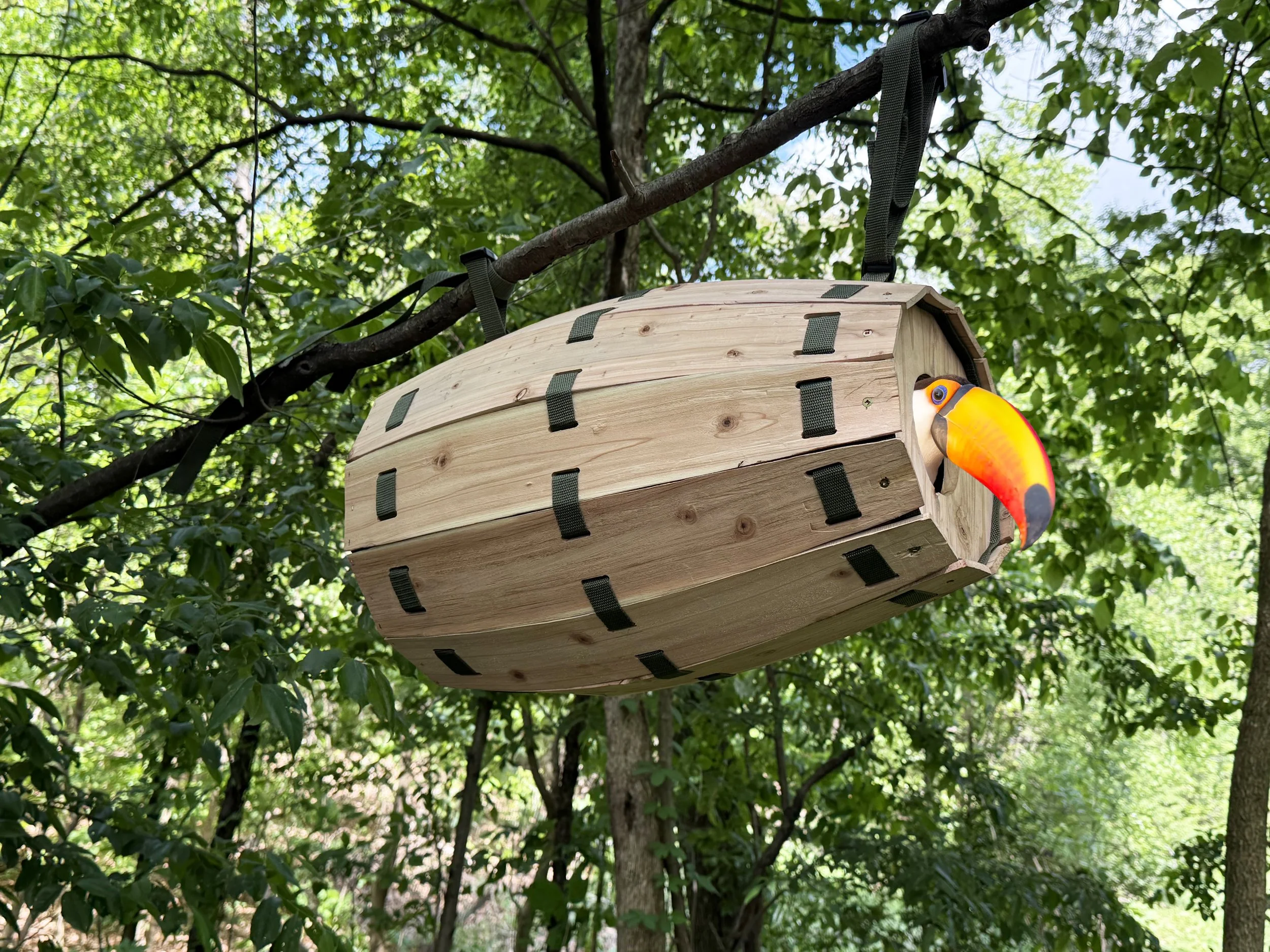
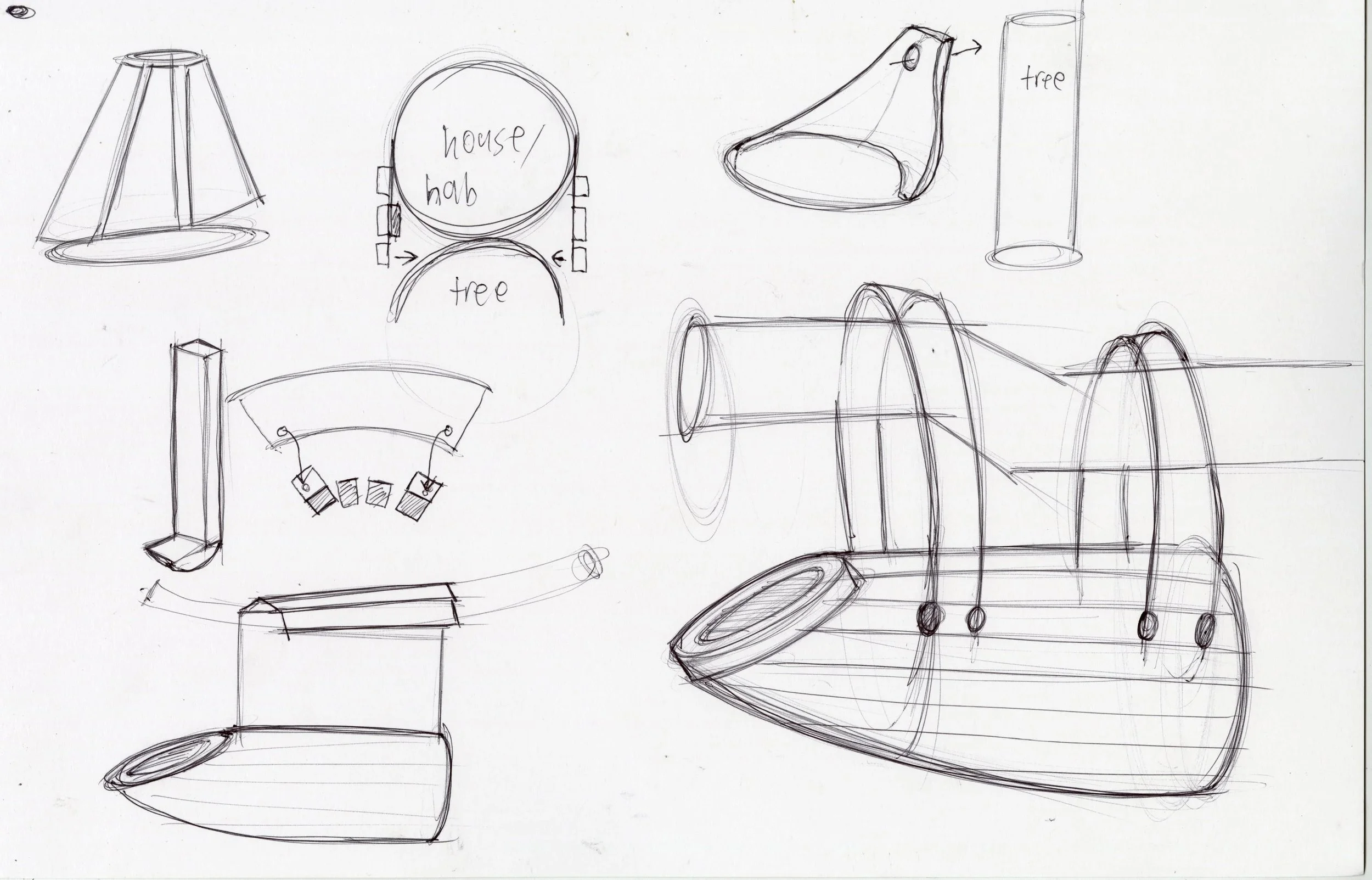
Toco Toucans make their nests in hollowed out tree trunks and limbs, meaning it was essential to replicate the shape of a tree and include an entryway.
Called “The Tou-Can” due to its overall shape, the narrow front means predators cannot enter the habitat, while the wider back allows room for the Toucans inside.
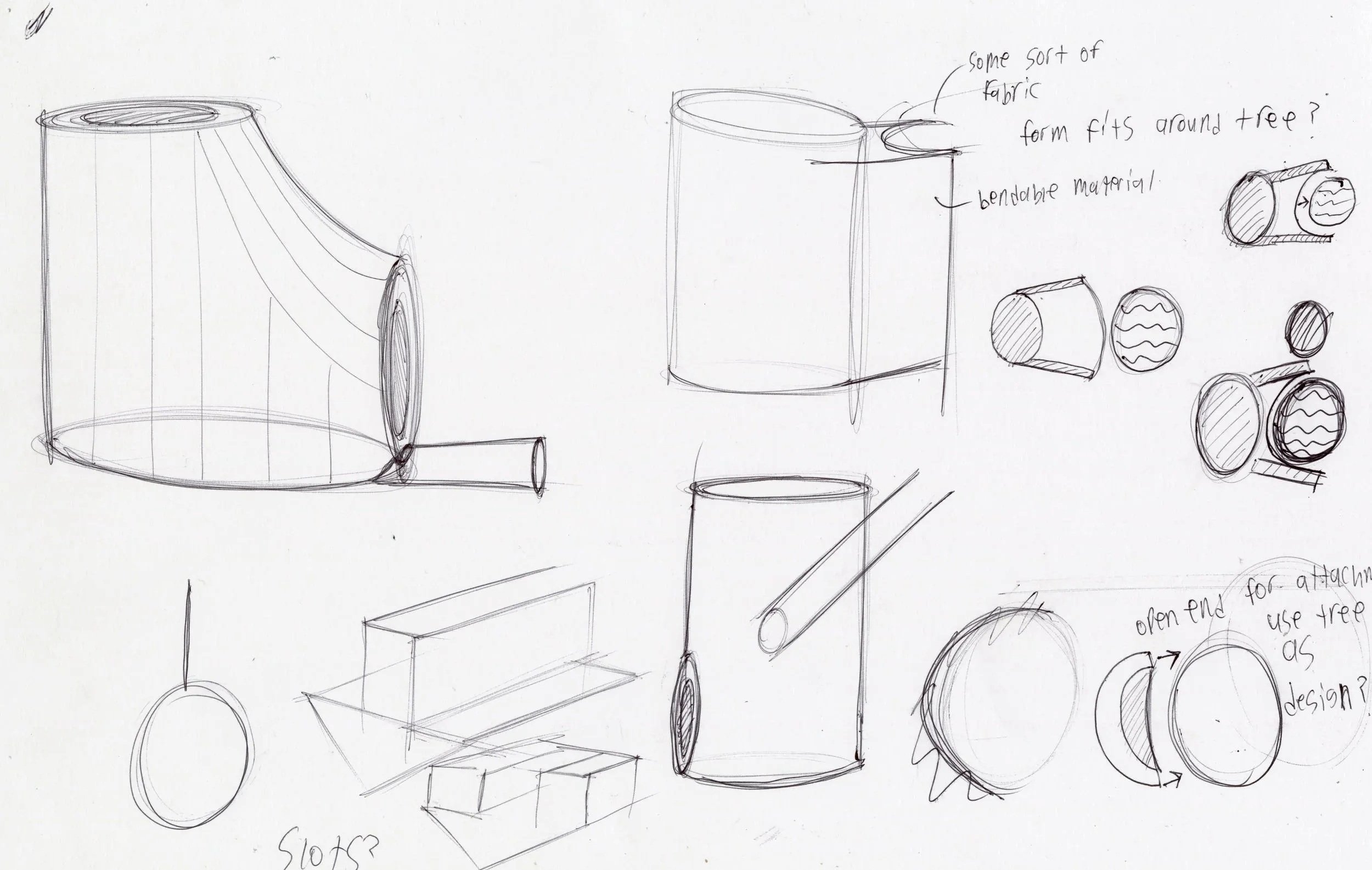
To keep the natural look, nylon straps were used to bend the wood instead of metal, with the only adhesion being where the “caps” are secured to the staves. Buckles attached to the meeting nylon ends allow the structure to be attached to any sized tree branch or trunk.
The end result is a habitat that can be strapped directly to a tree or tree-branch while matching its environment, and being entirely hand constructed
.
Research Boards
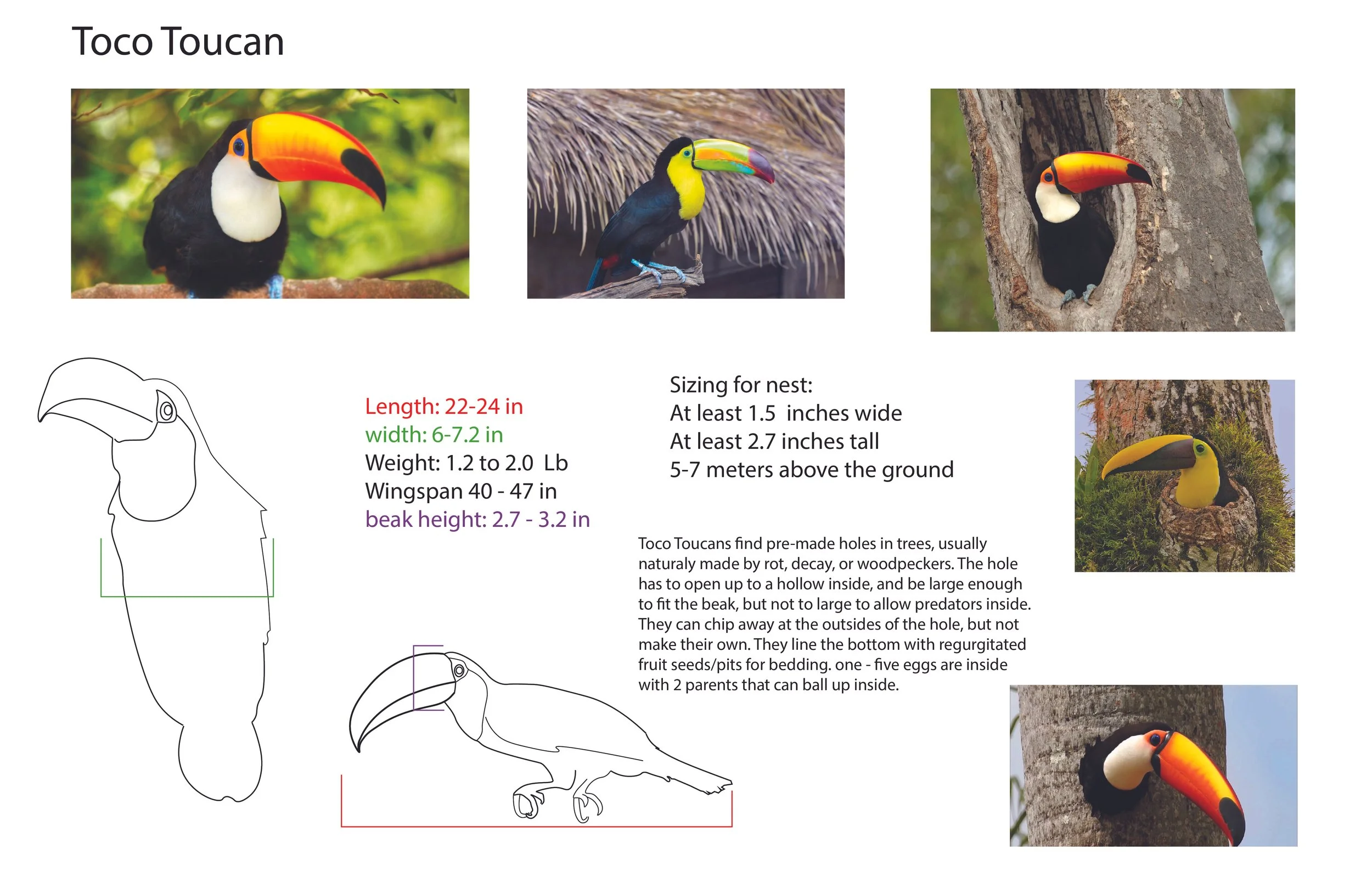
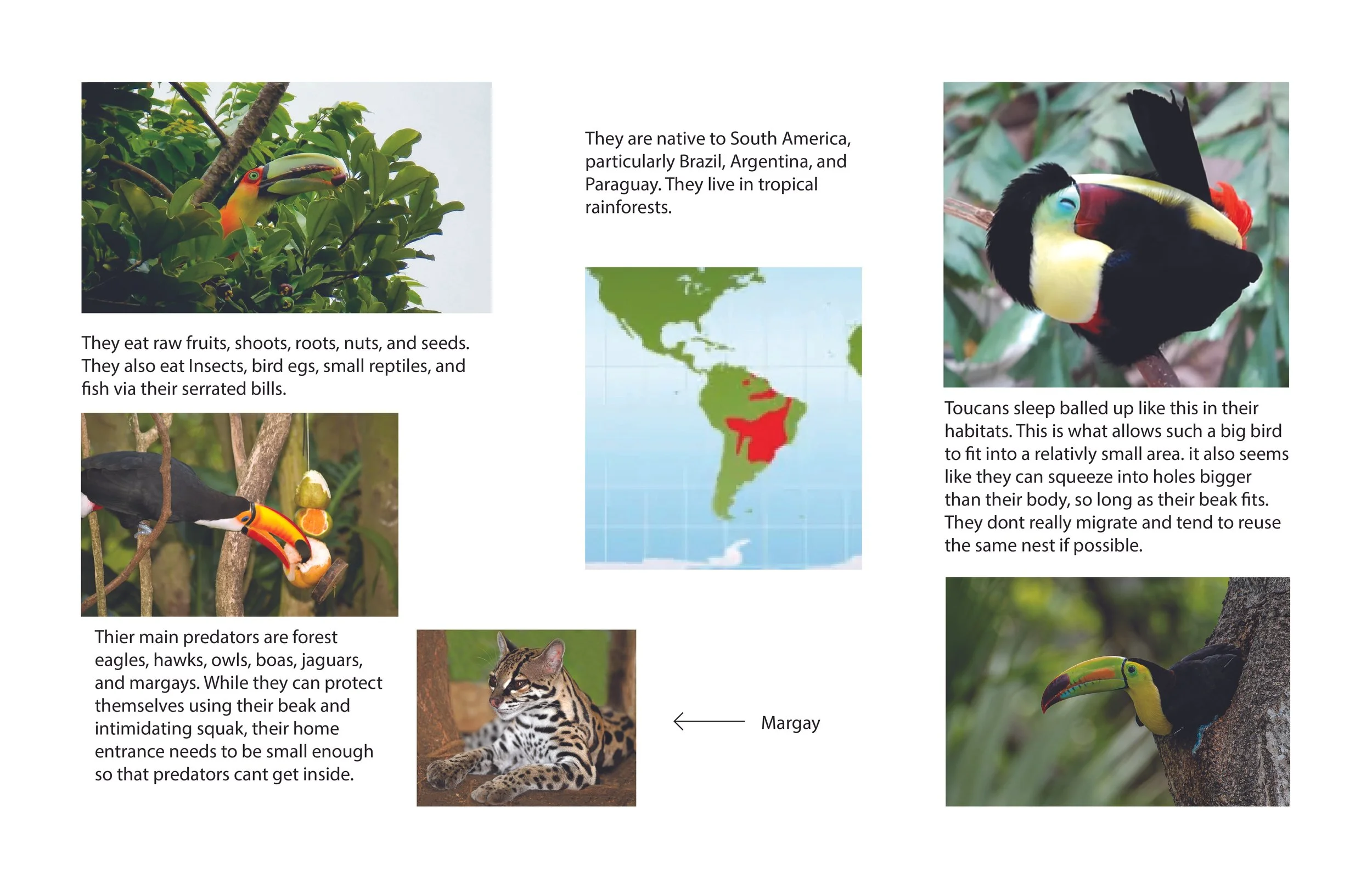
Research was done on the Toco Toucan itself as well as its nesting habits. It was found that Toco Toucans find pre-made holes in trees to made their nest, and can fold themselves into a ball while sleeping to save space. They line the bottom with seeds to even out the floor and for insulation, meaning the habitat simply needed to be a hole big enough to fit two Toucans, and be able to attach close to a tree.
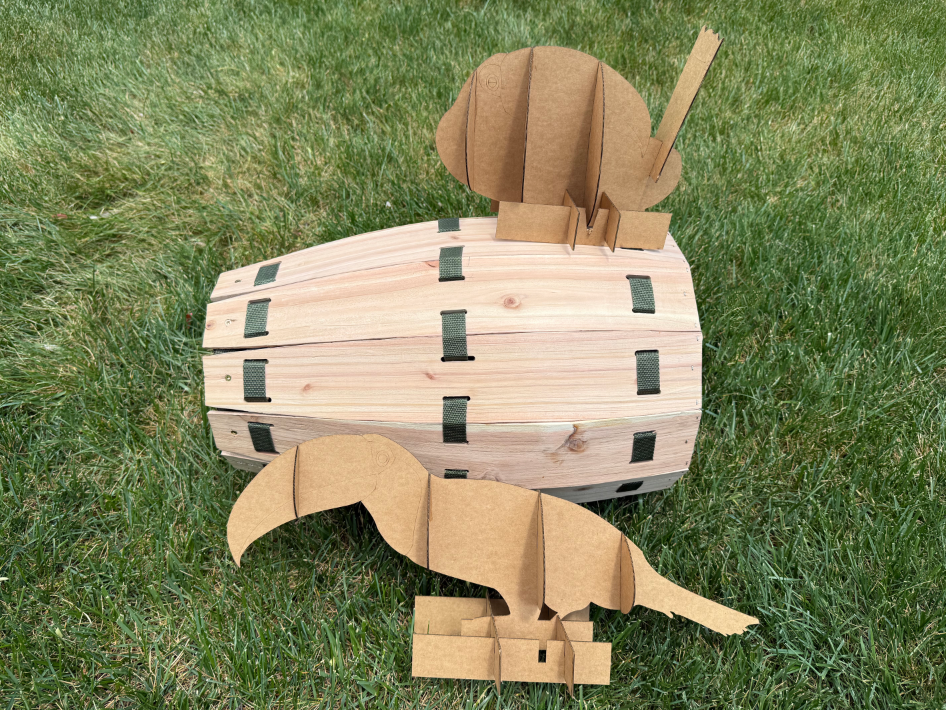
Inside the nest (Tucked)
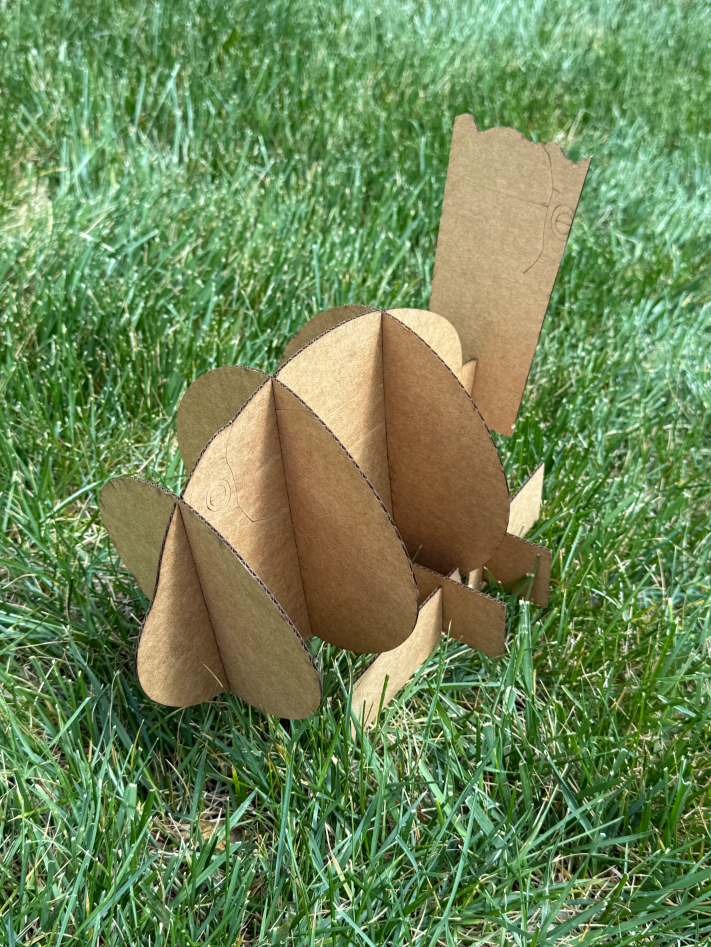
Scale models of Toucan
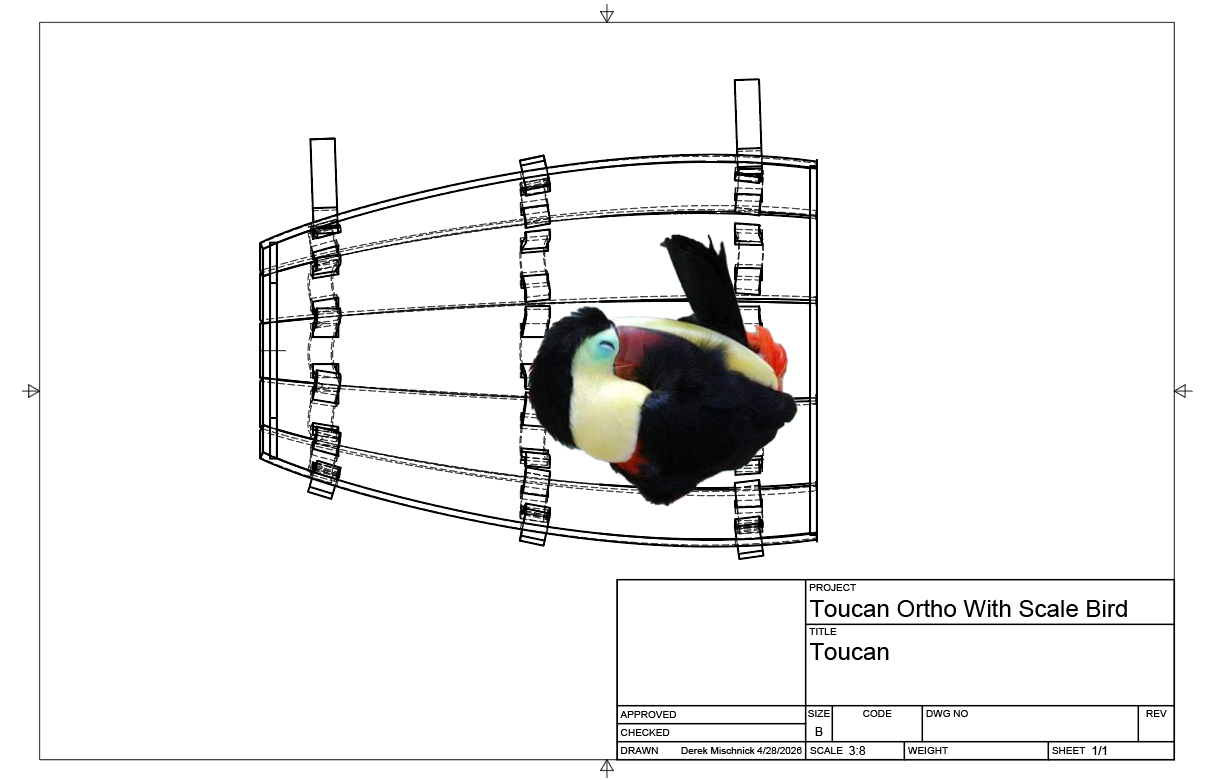
In order to understand the proportion of the Toucan, a cardboard scale model was made. After more research, it was discovered that toucans tuck their beaks into their body when sleeping, so another model was fabricated.
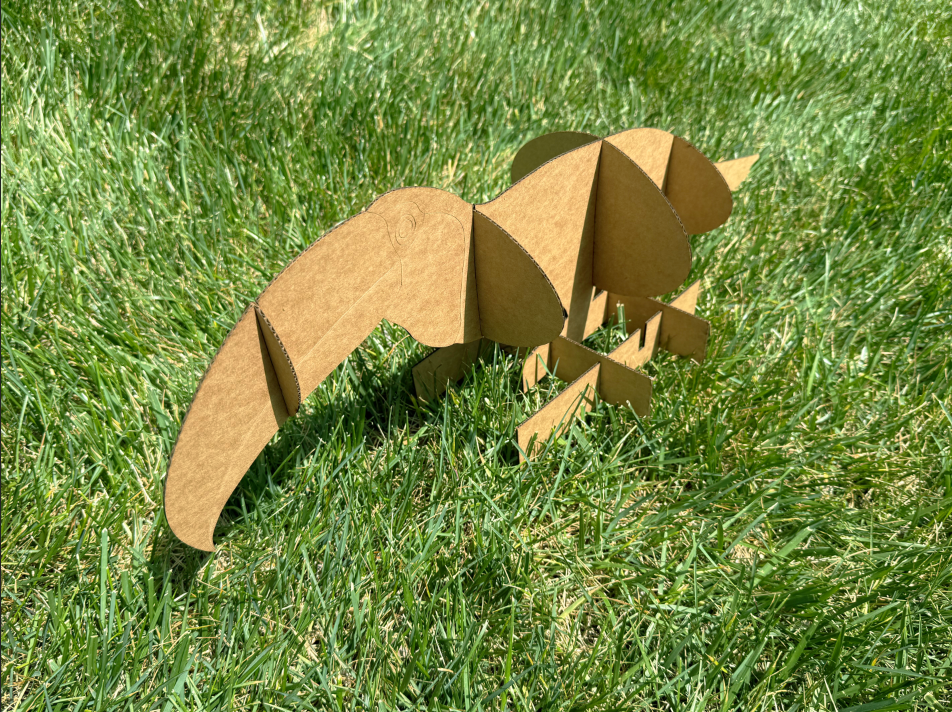
Outside the nest (full length)
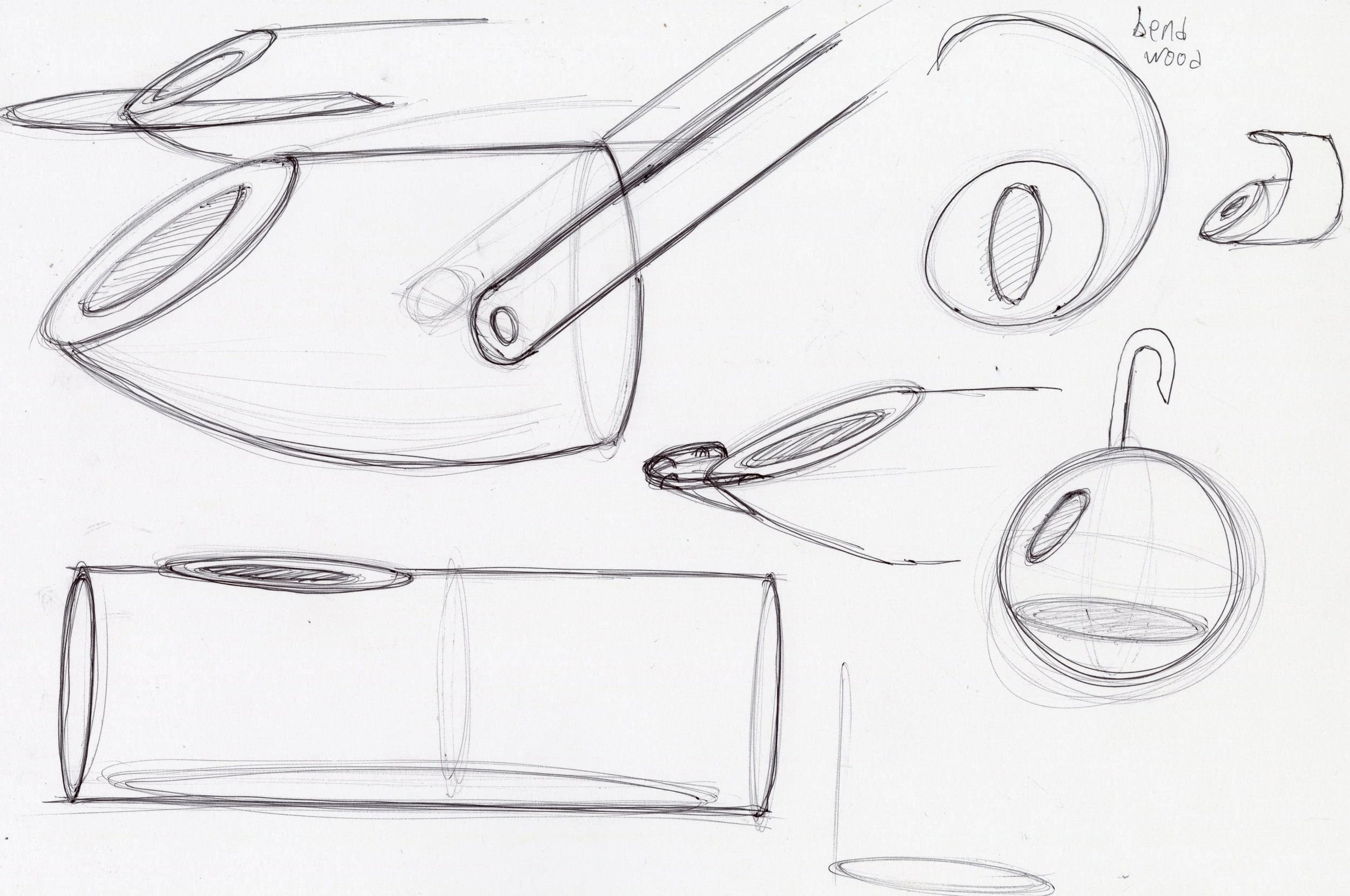
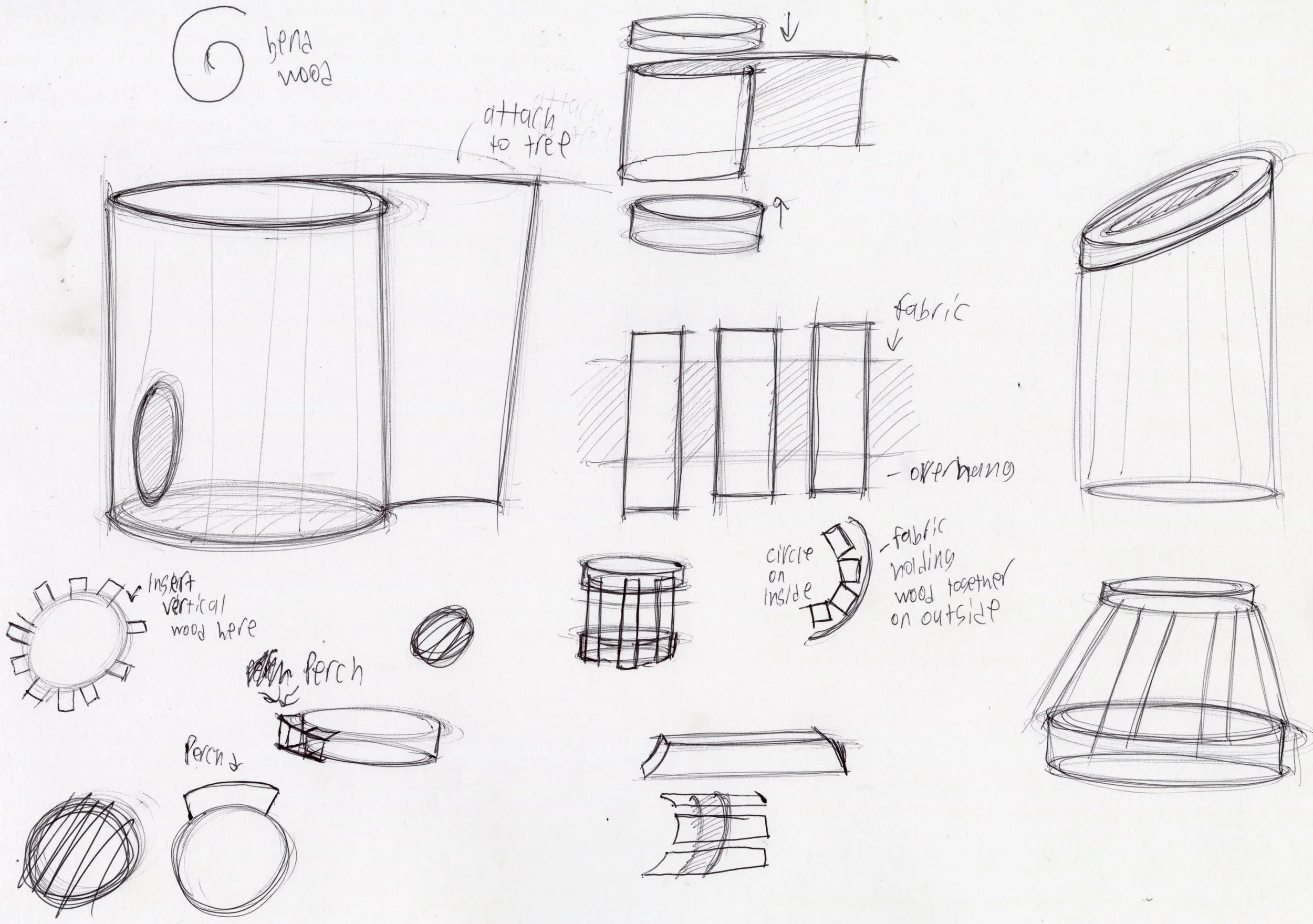
ideation sketches
Material Research
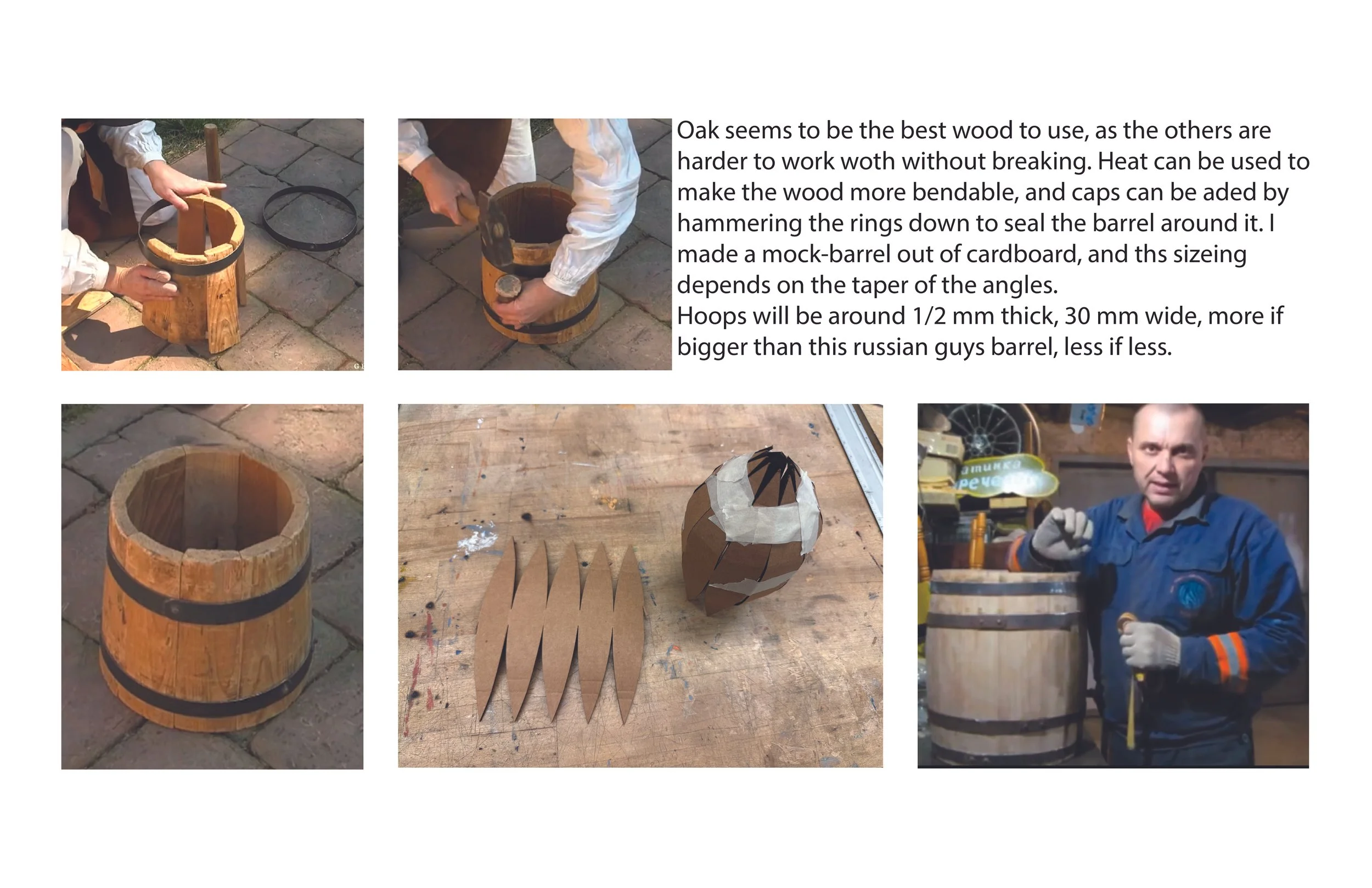
Toucans nest in trees, so a round wooden structure was needed. Barrel making provided significant inspiration, upon which iterations were made.
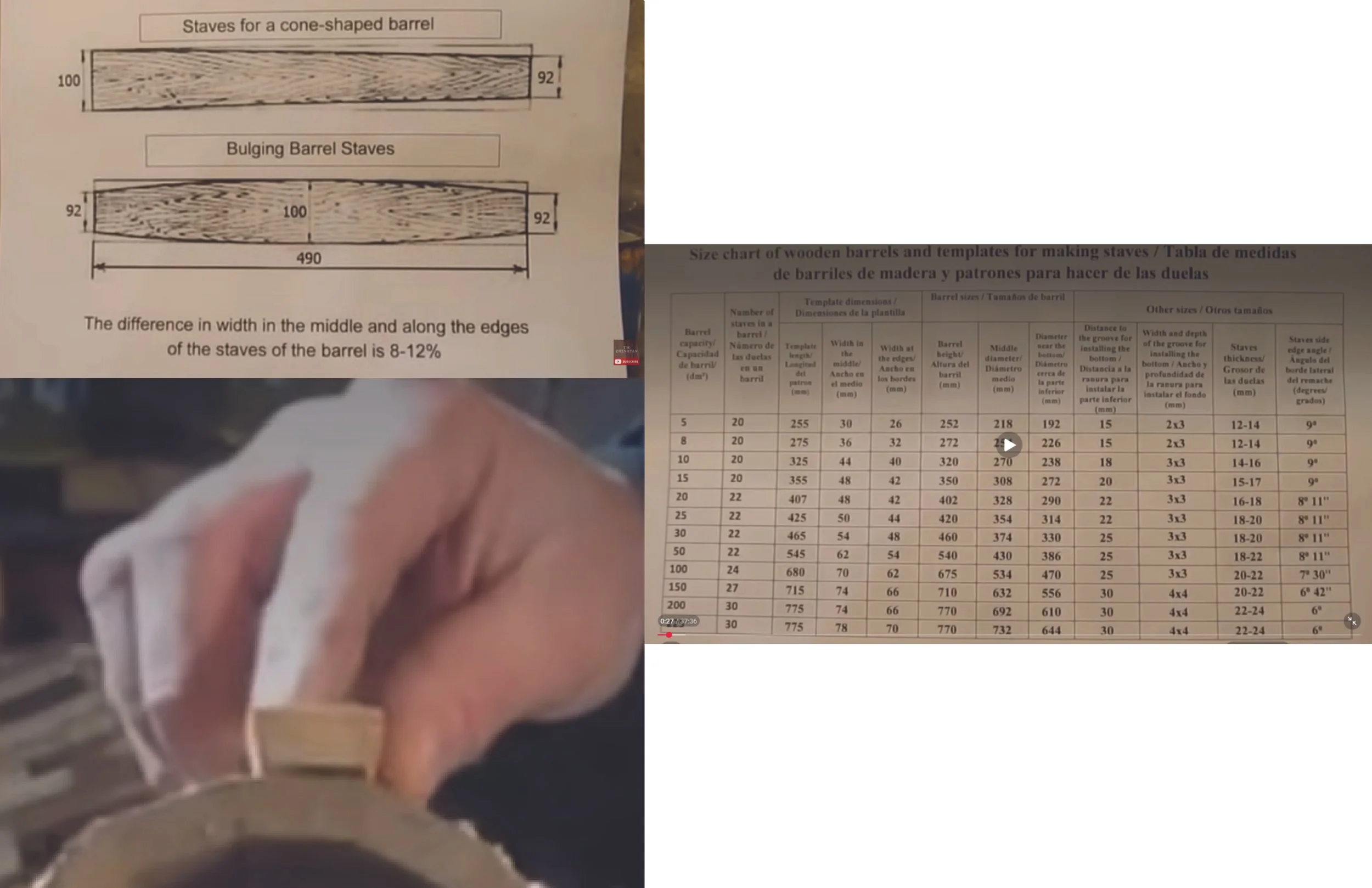
Stave research
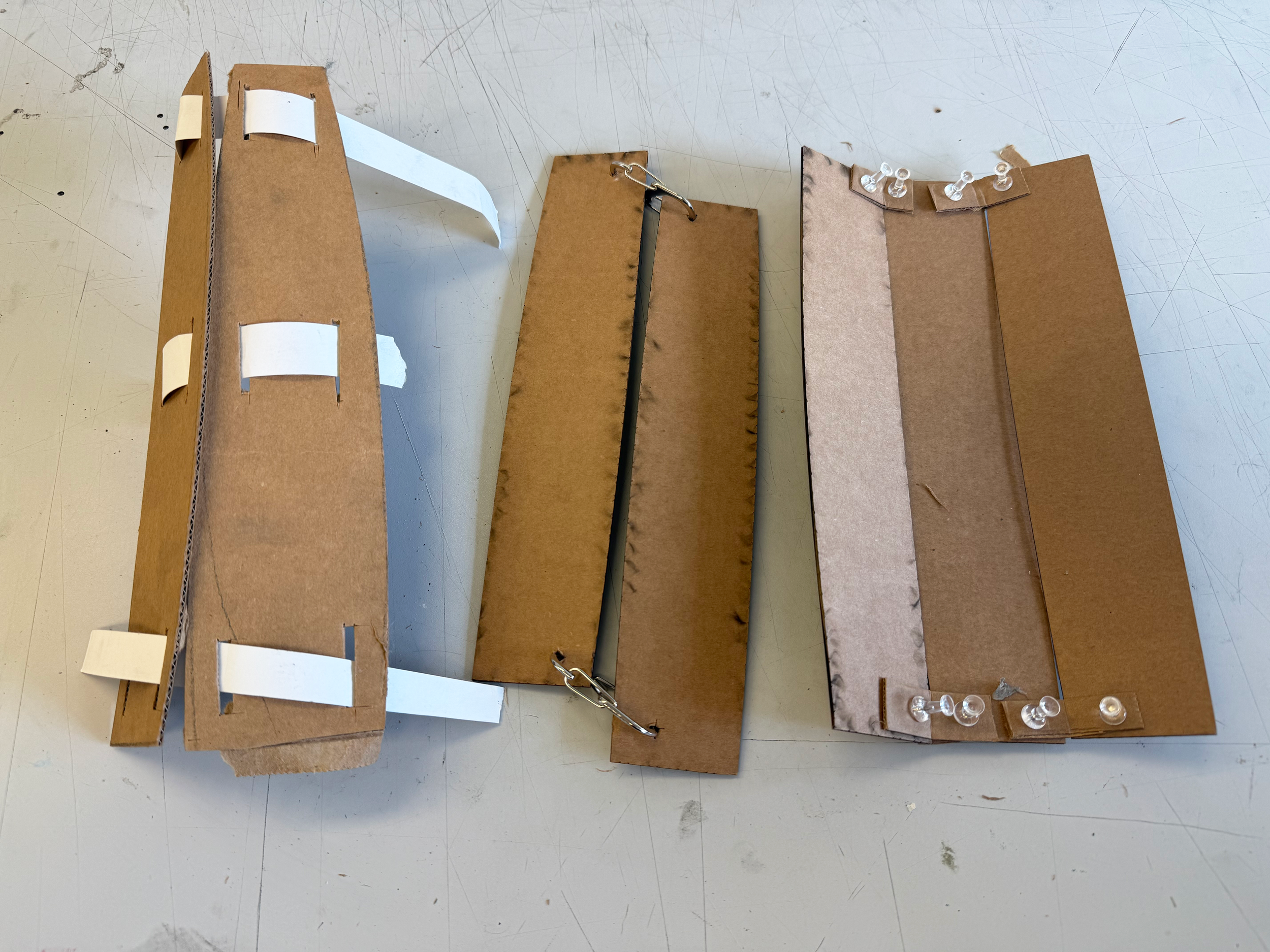
Testing adhesion methods
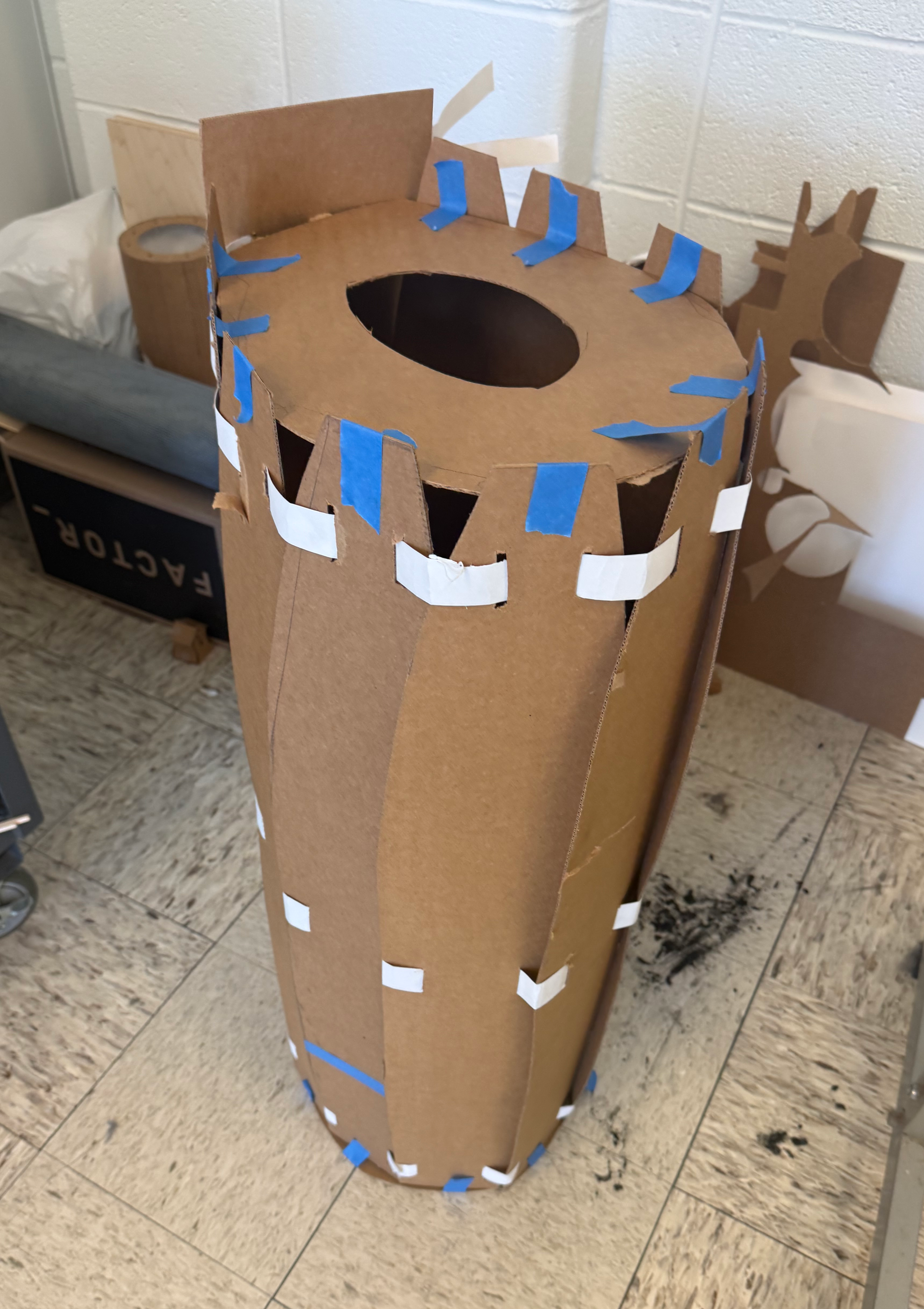
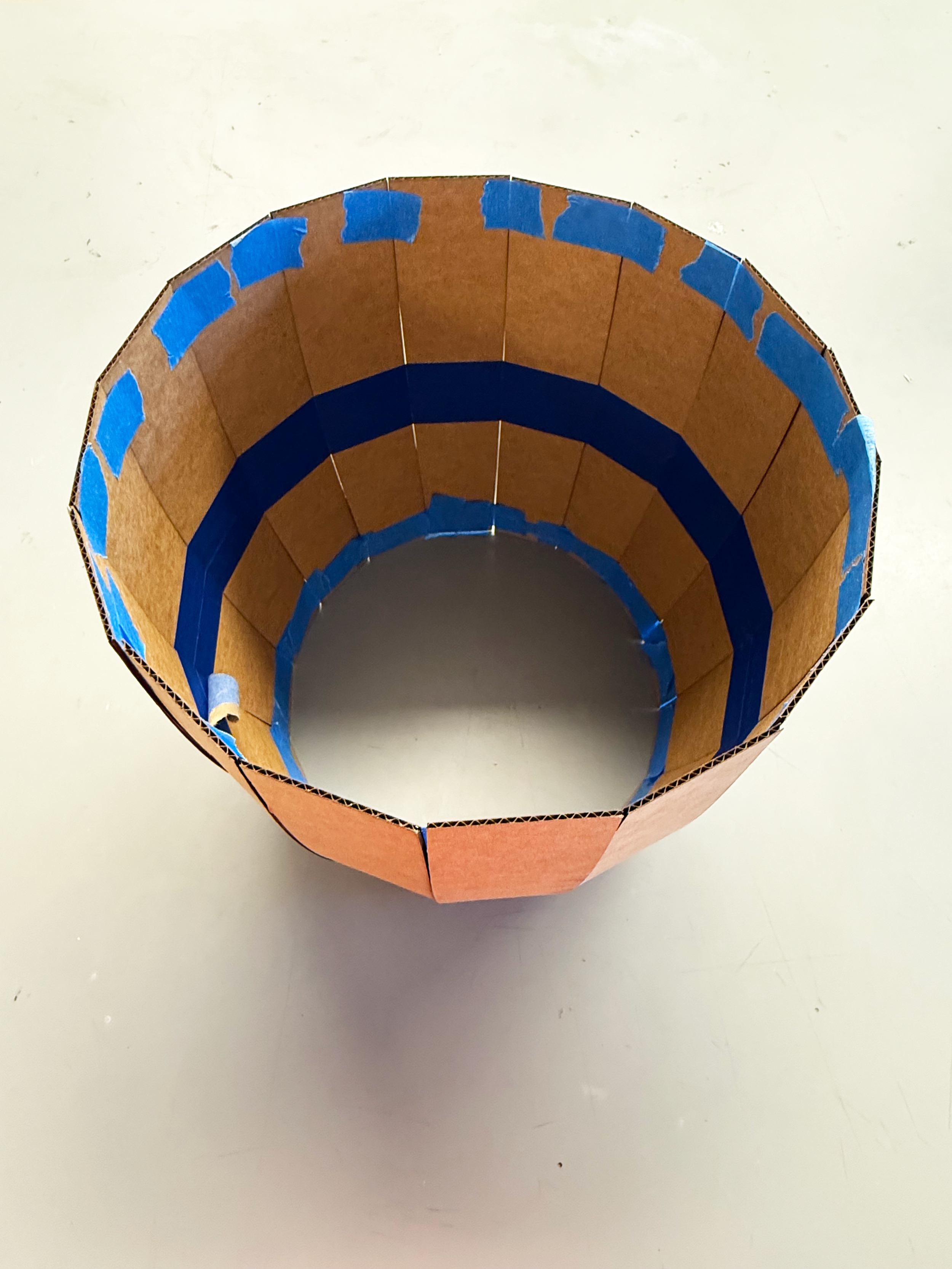
Testing stave method
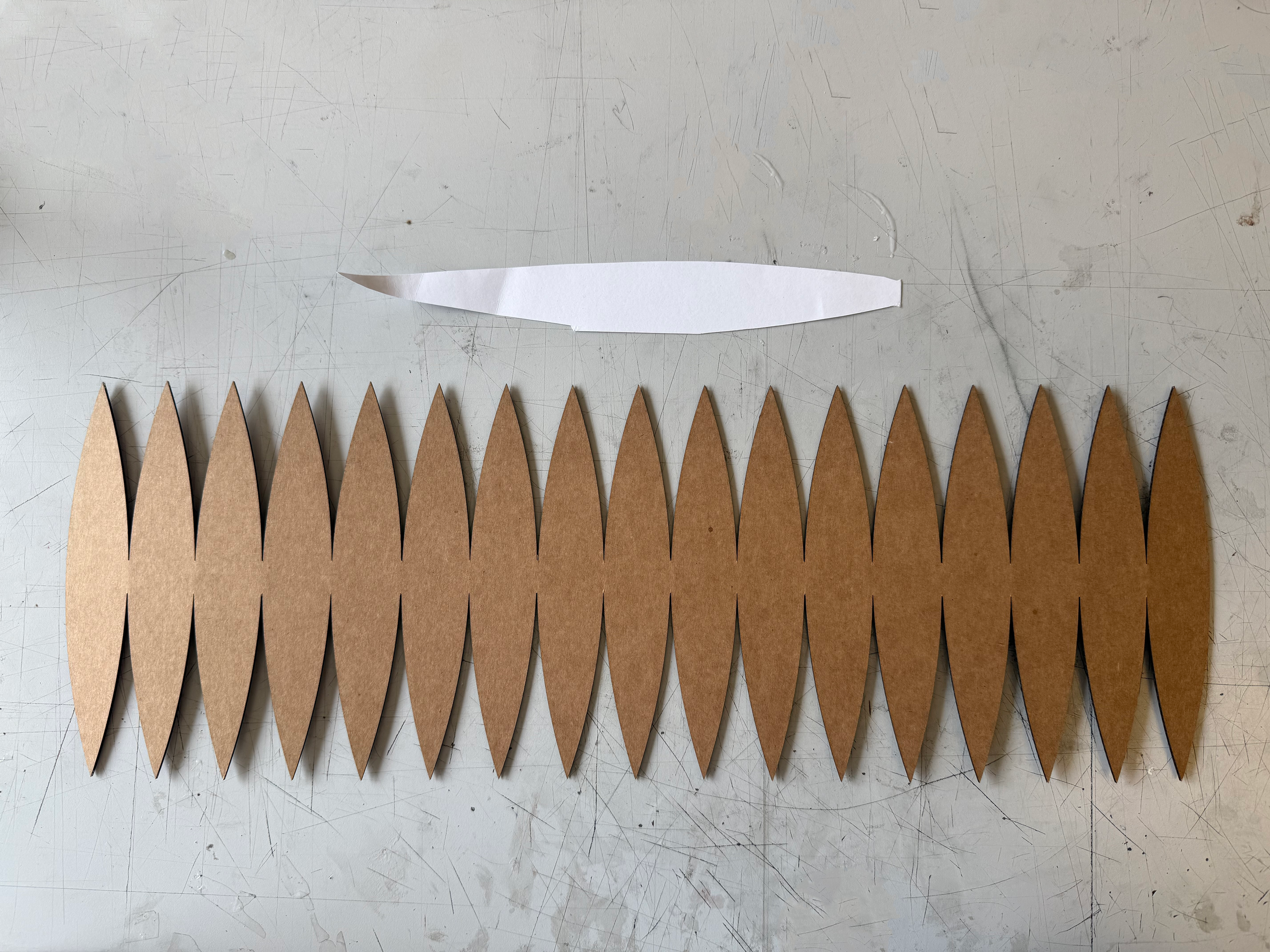
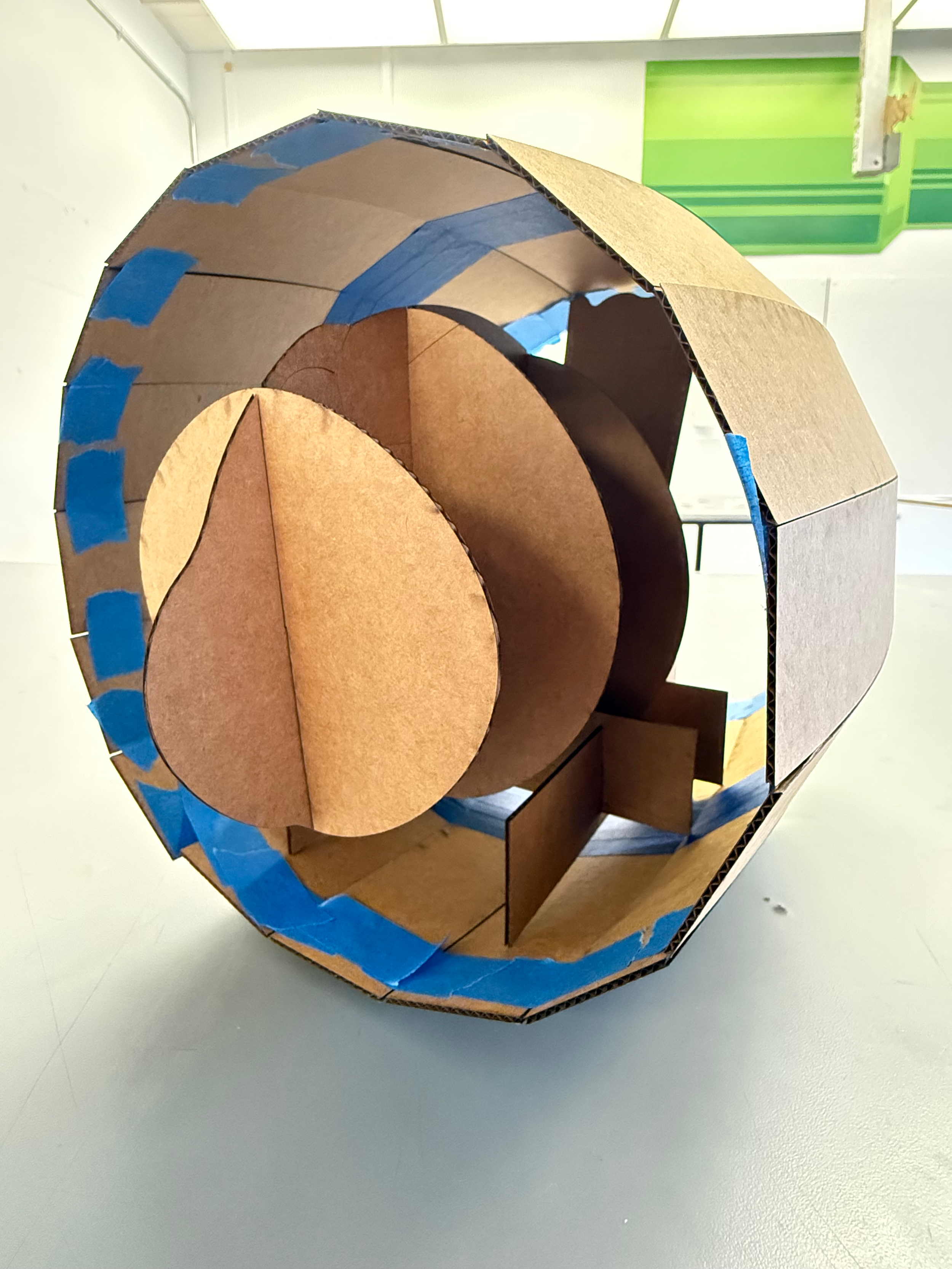
A test model was made to test curvature. Then, a large scale model was made using the tightening method that would be employed on the final model, with paper replacing the straps.
Testing stave method
A test model was made to test curvature. Then, a large scale model was made using the tightening method that would be employed on the final model, with paper replacing the straps.
Renders
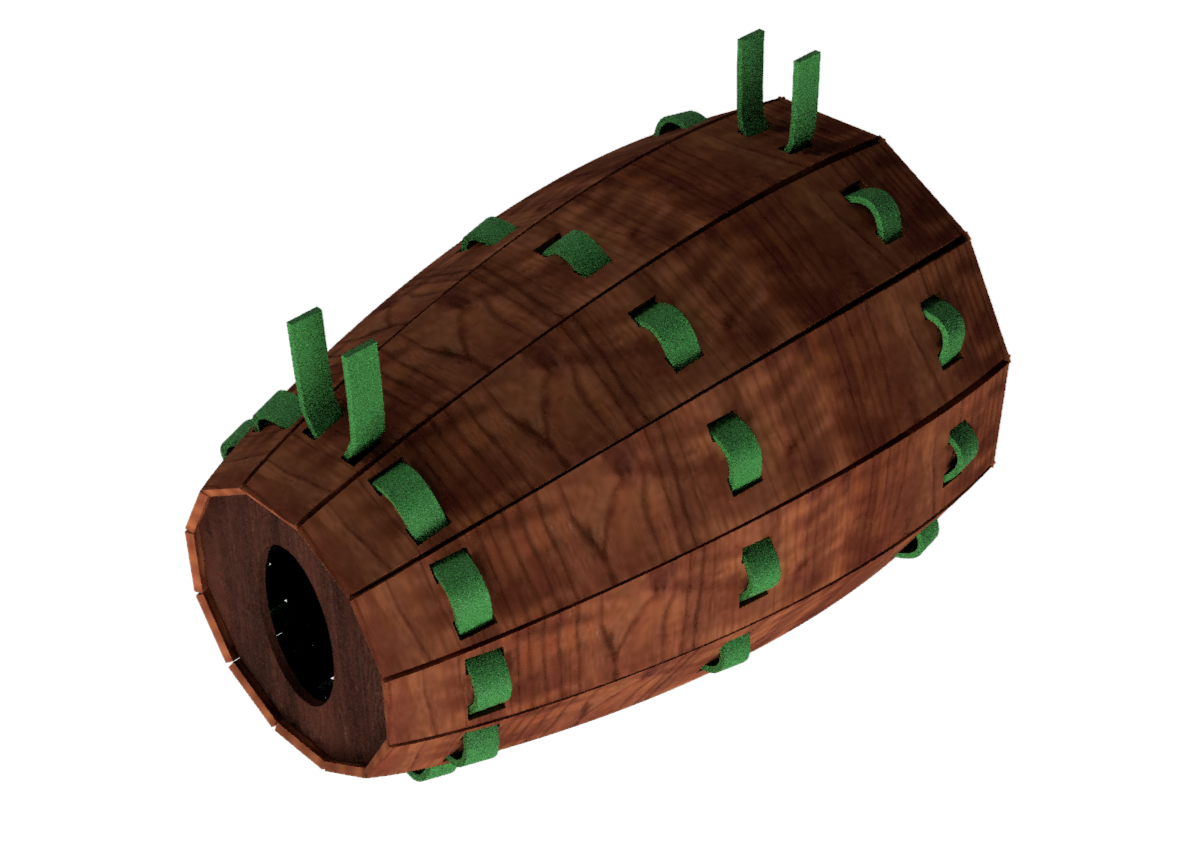
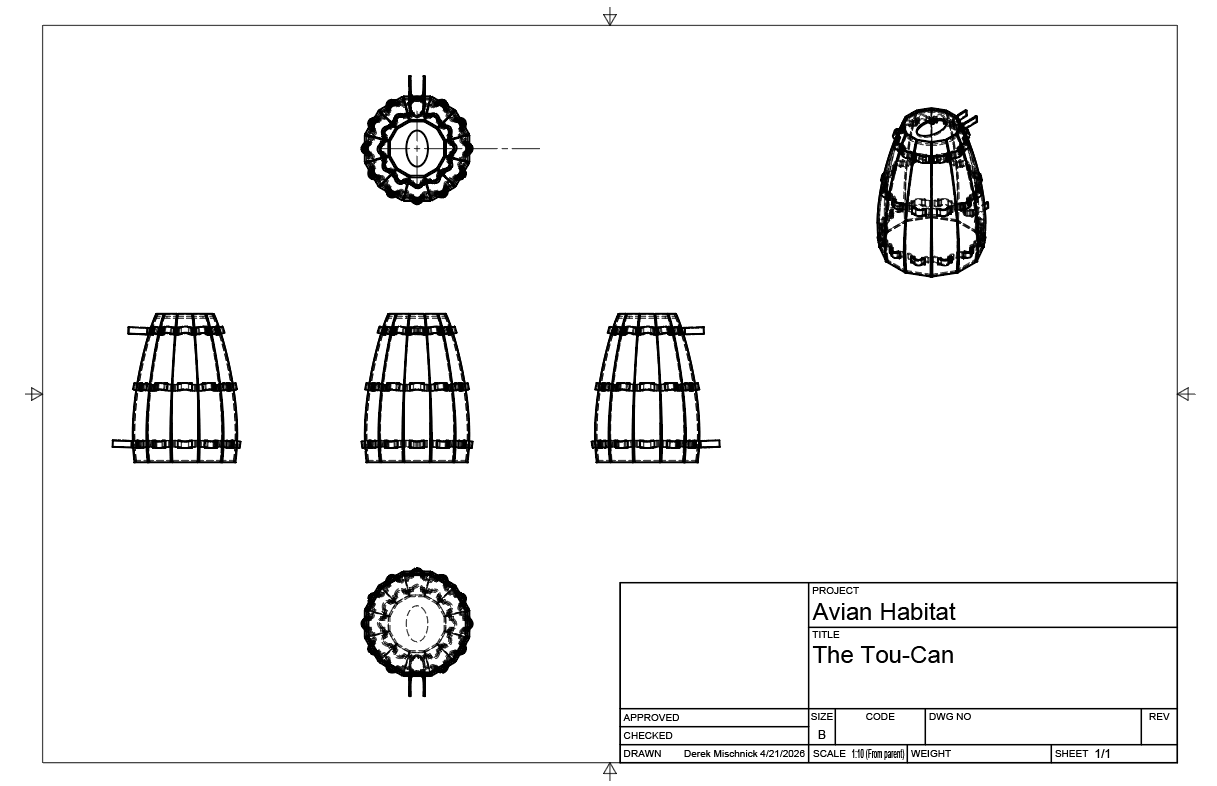
A render and orthographic models were made using fusion to further realize and dimension the end goal.
Making the Staves
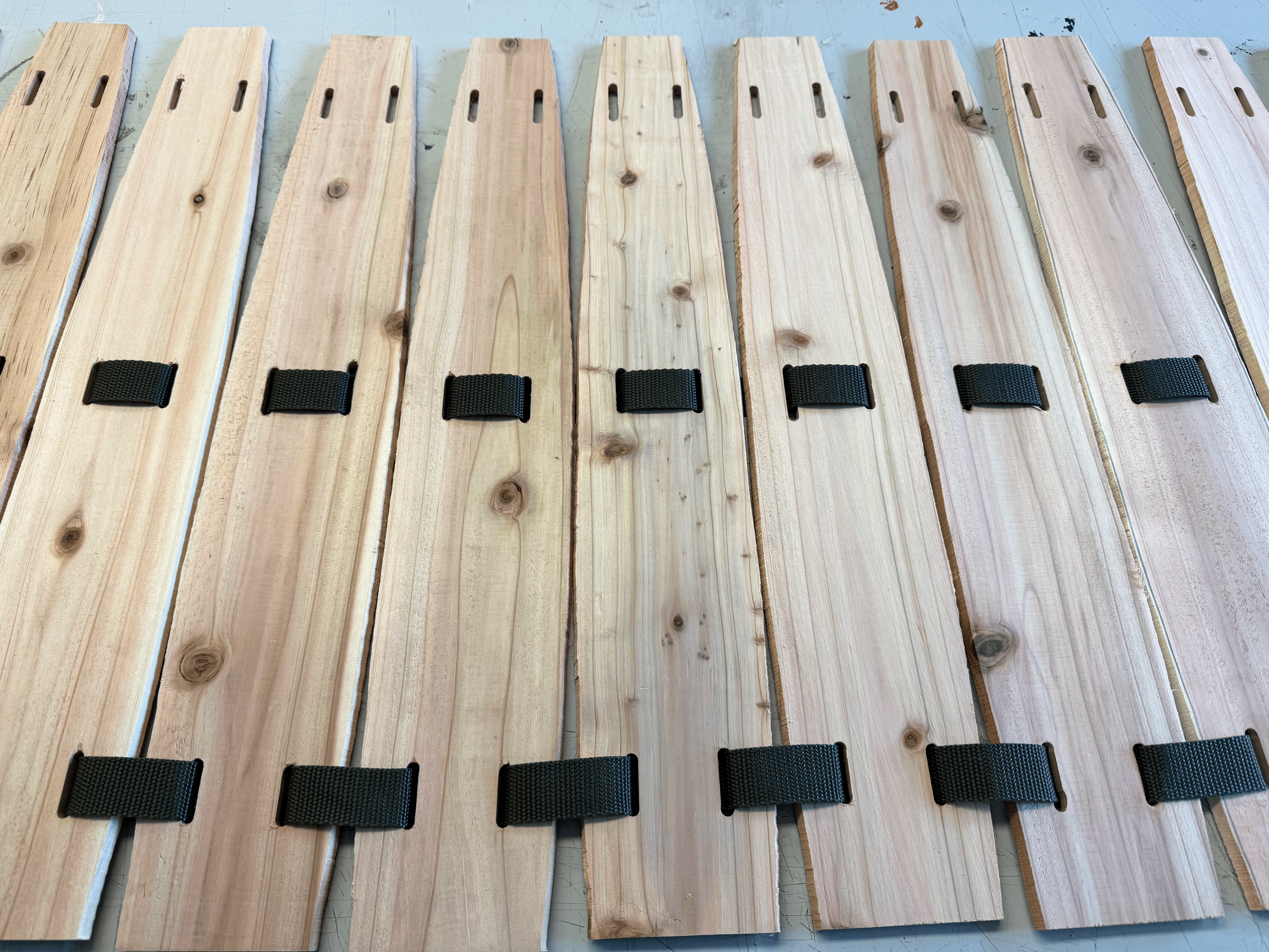
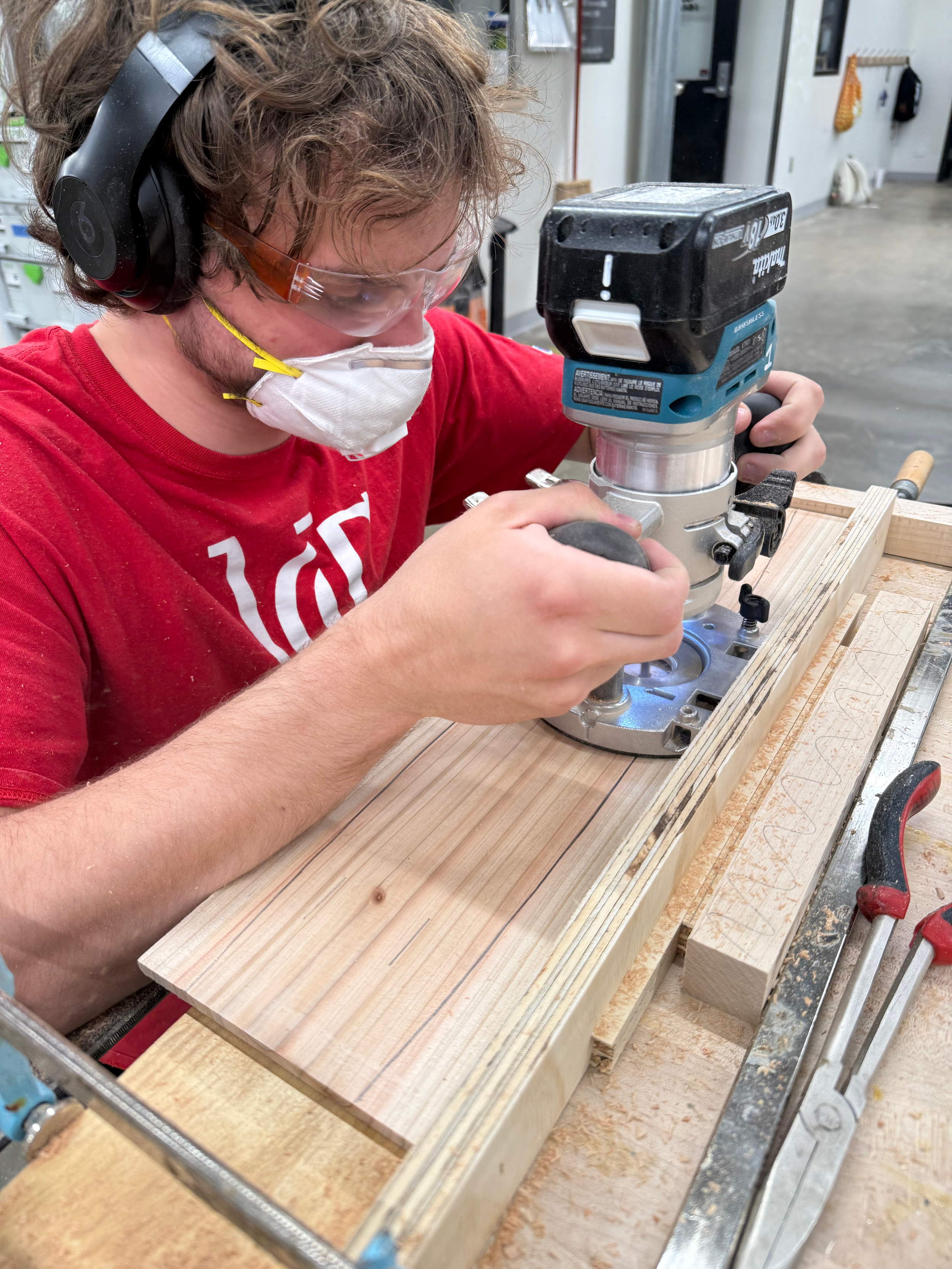
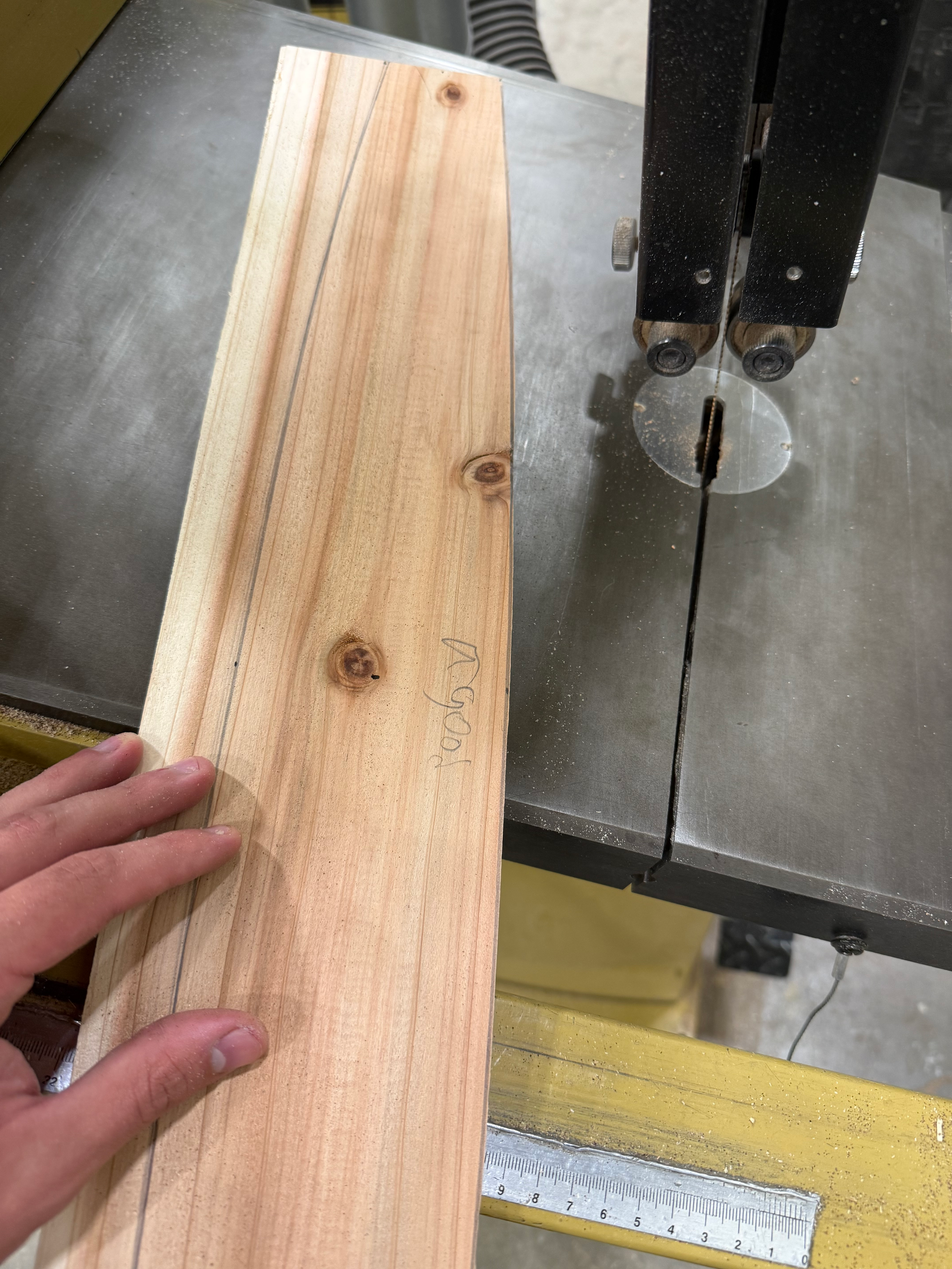
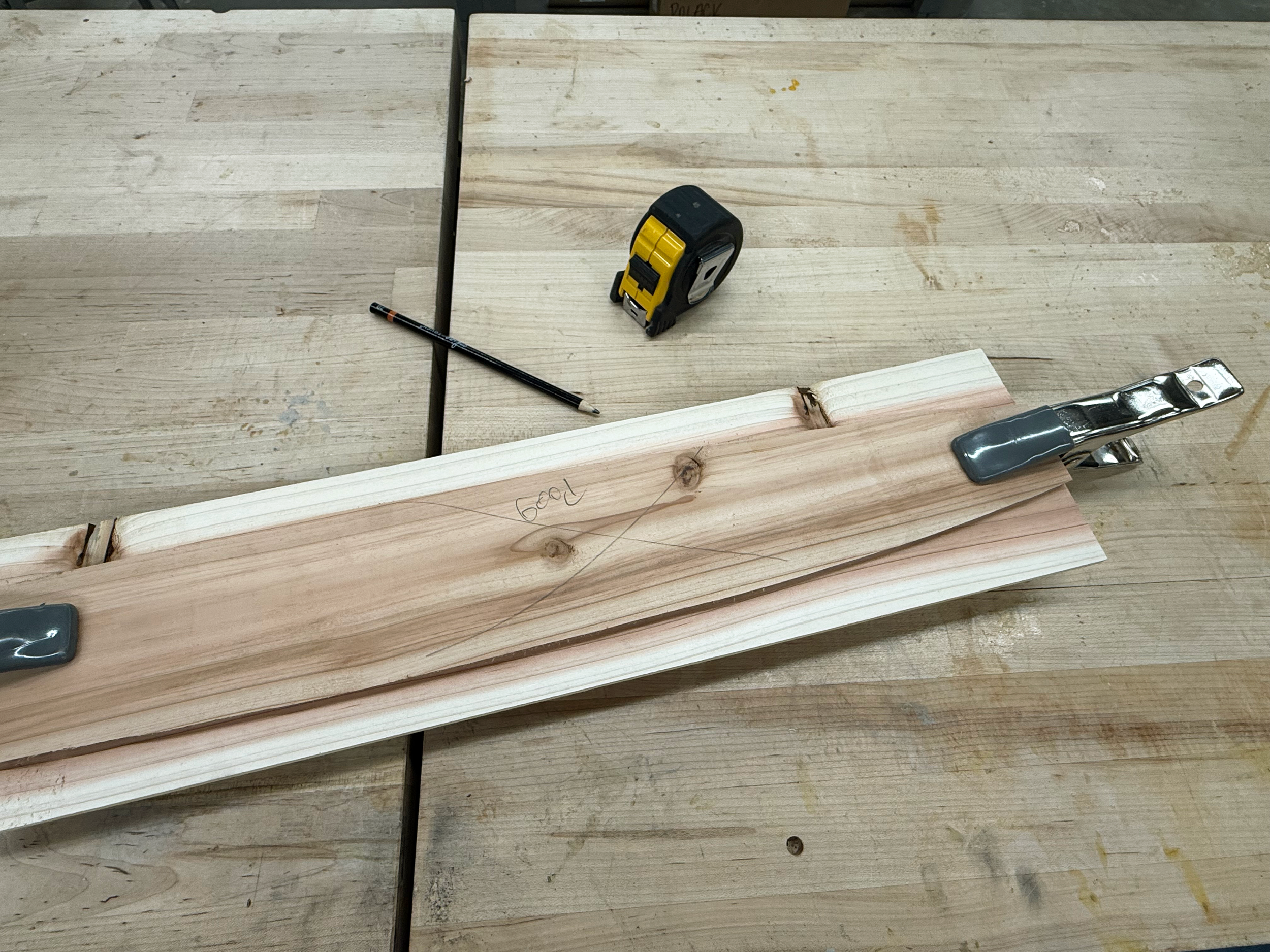
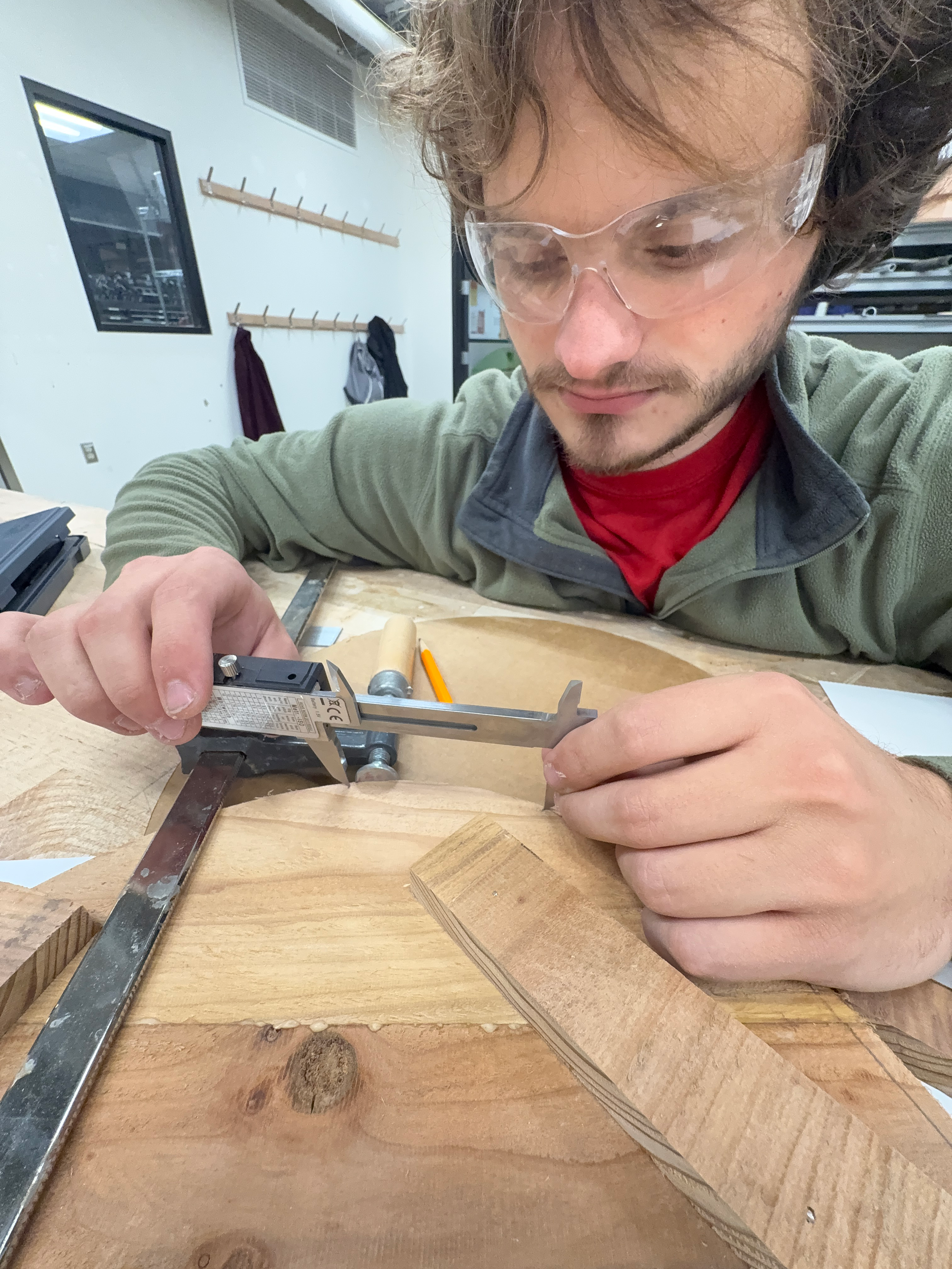
The staves were made of Cedar due to its low thickness and cost. An initial stave was made flat for tracing, while all it’s copies were cut at a 15 degree angle using the bandsaw. Slits for the nylon were cut using a makeshift frame and router.
Creating the caps
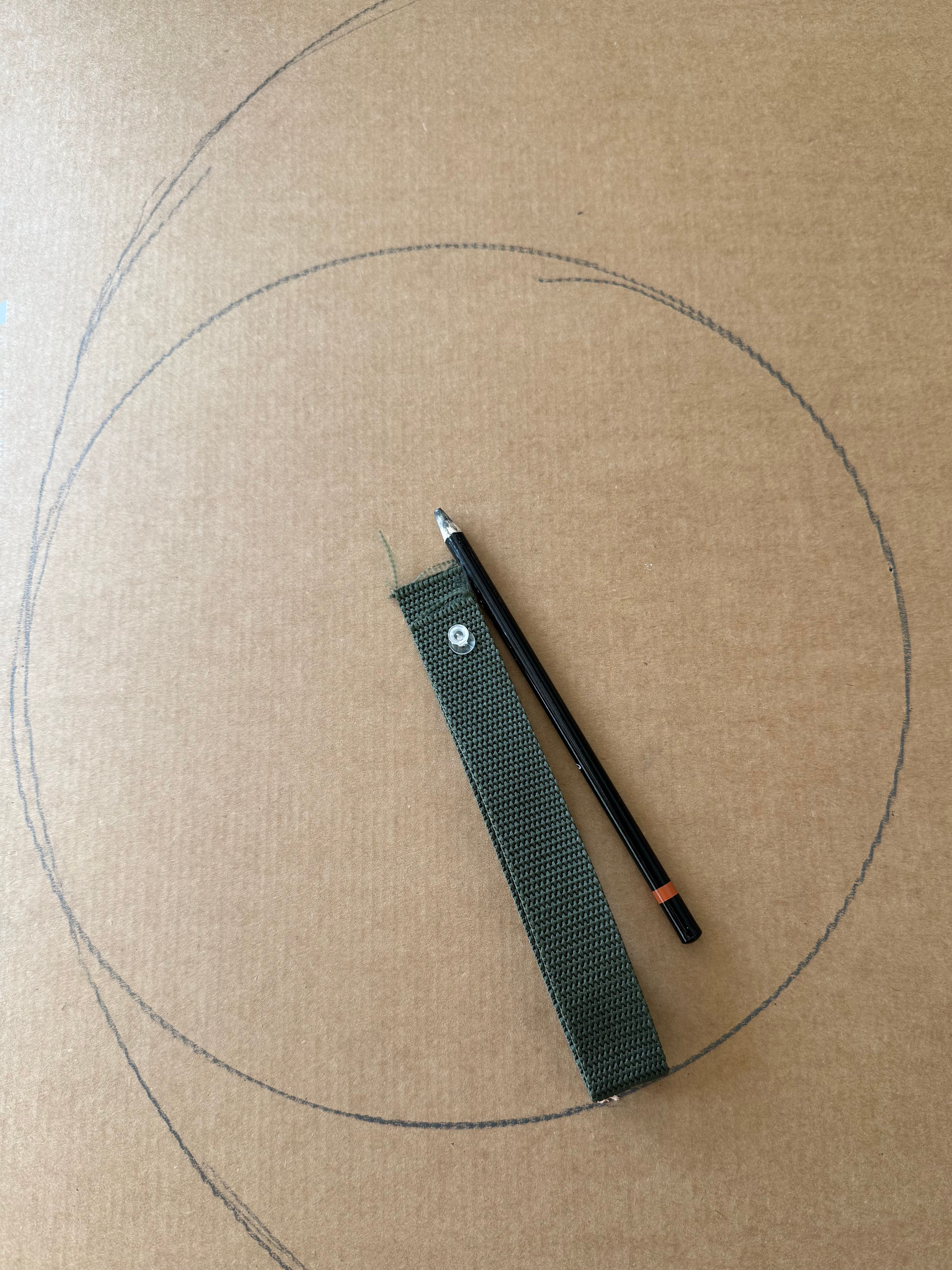
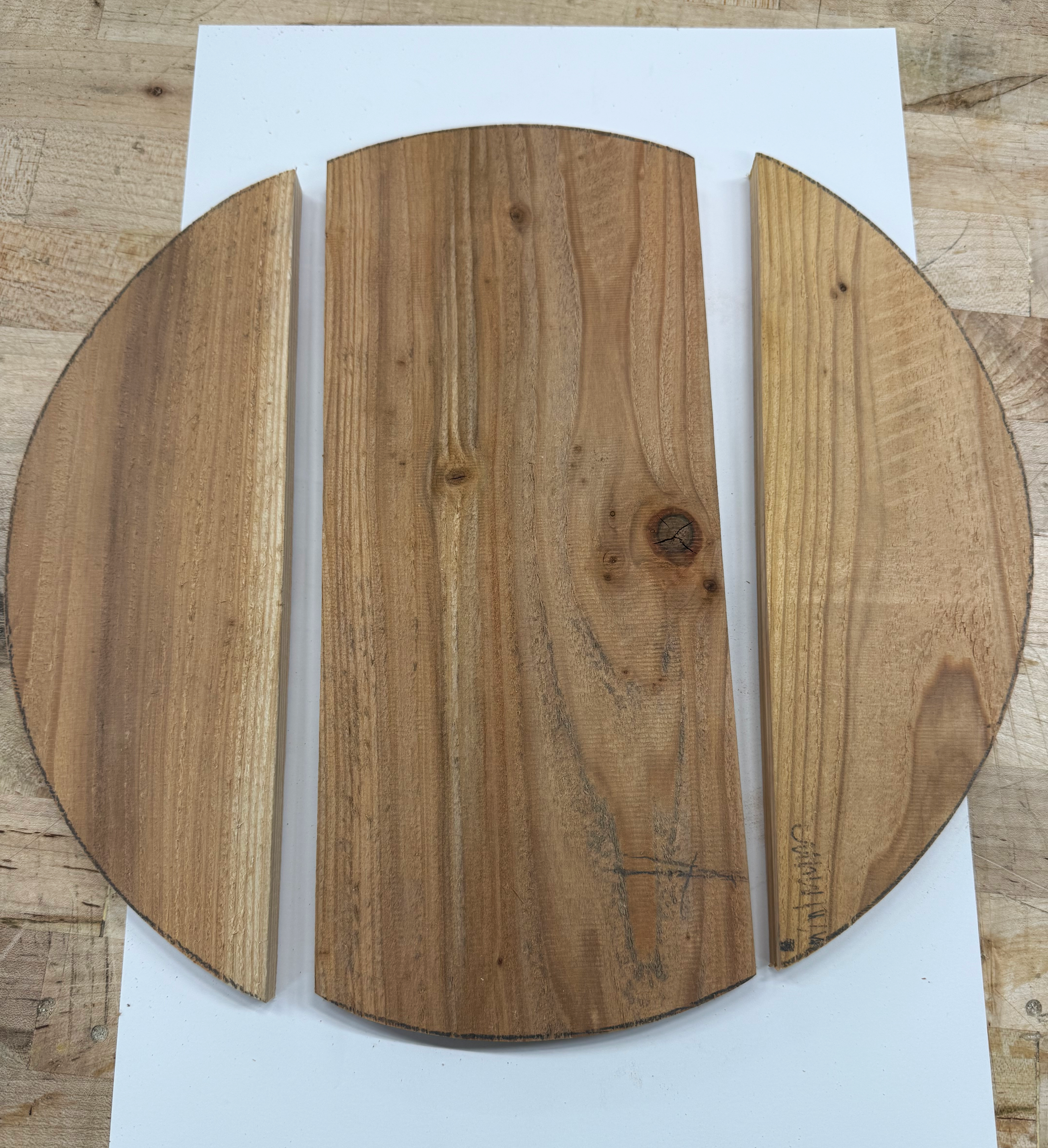
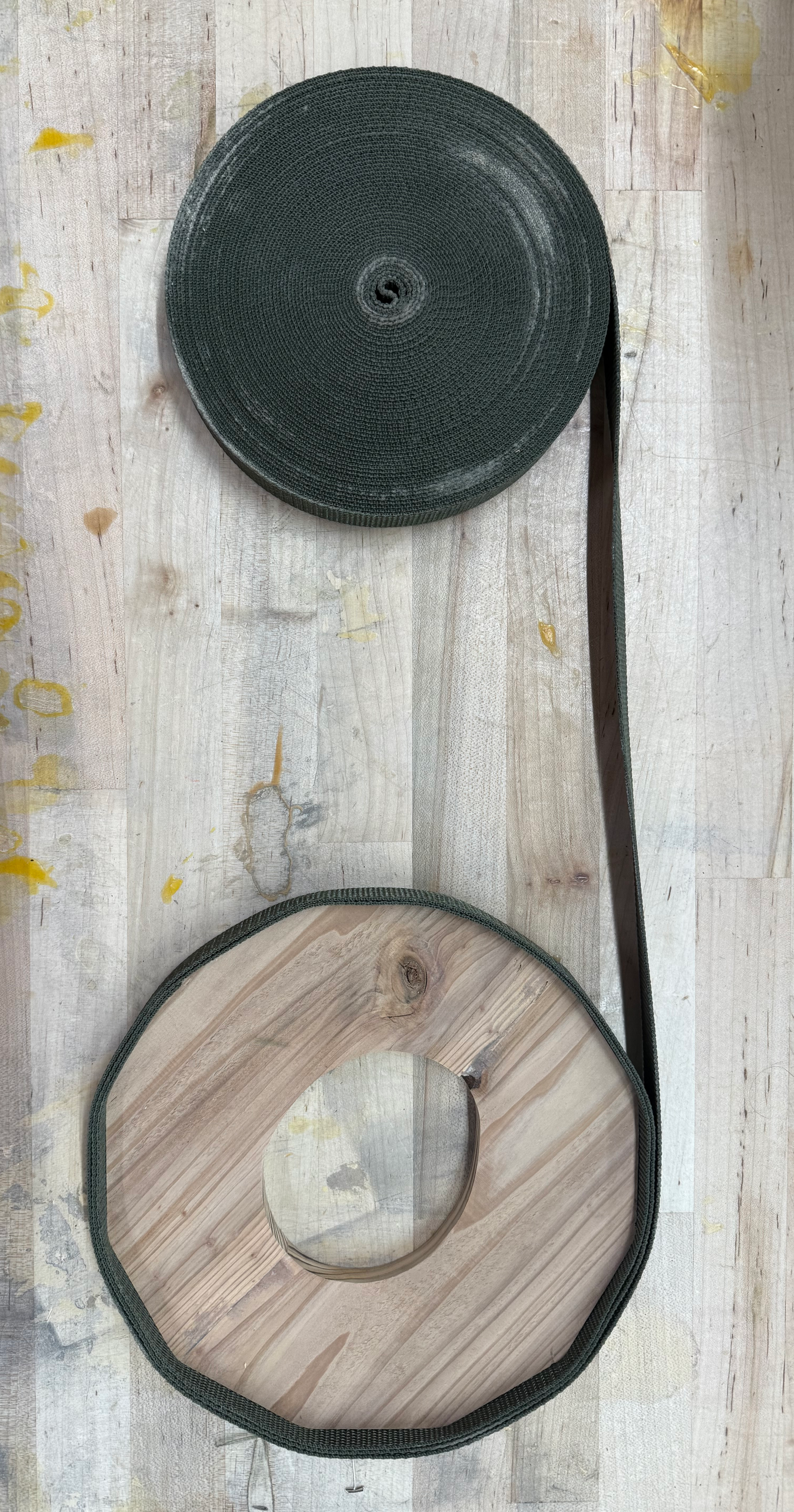
An entrance an end “cap” were made using 3 glued-together pieces of cedar. Their diameter was calculated using the sum of the ends of the staves. The caps were then cut to 15 degrees and padded with nylon.
Assembly
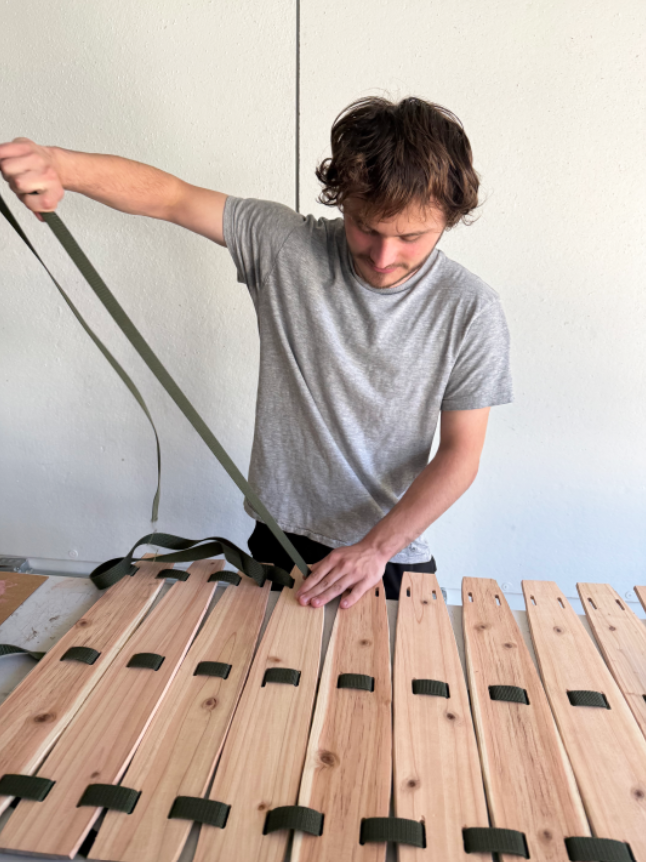
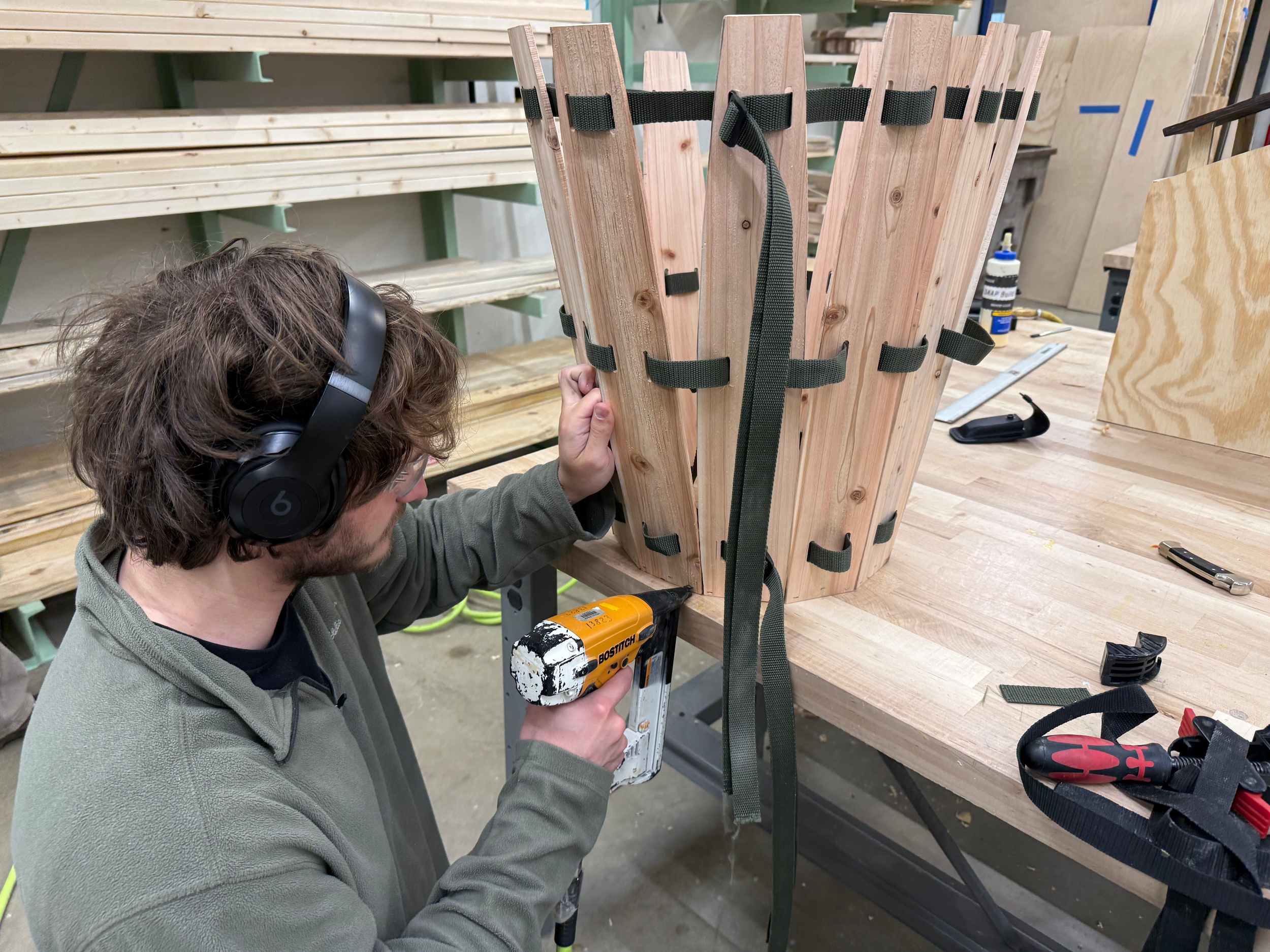
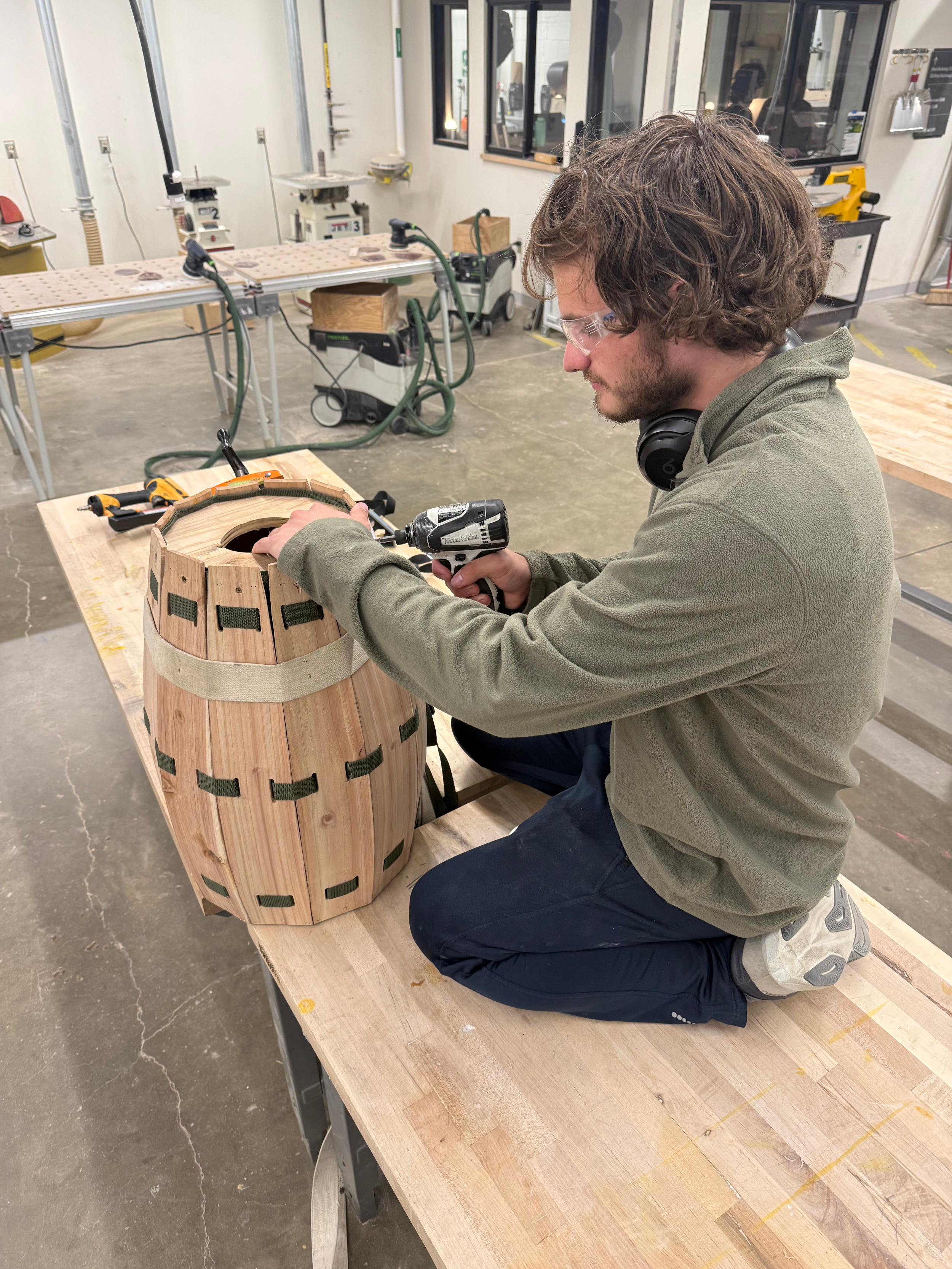
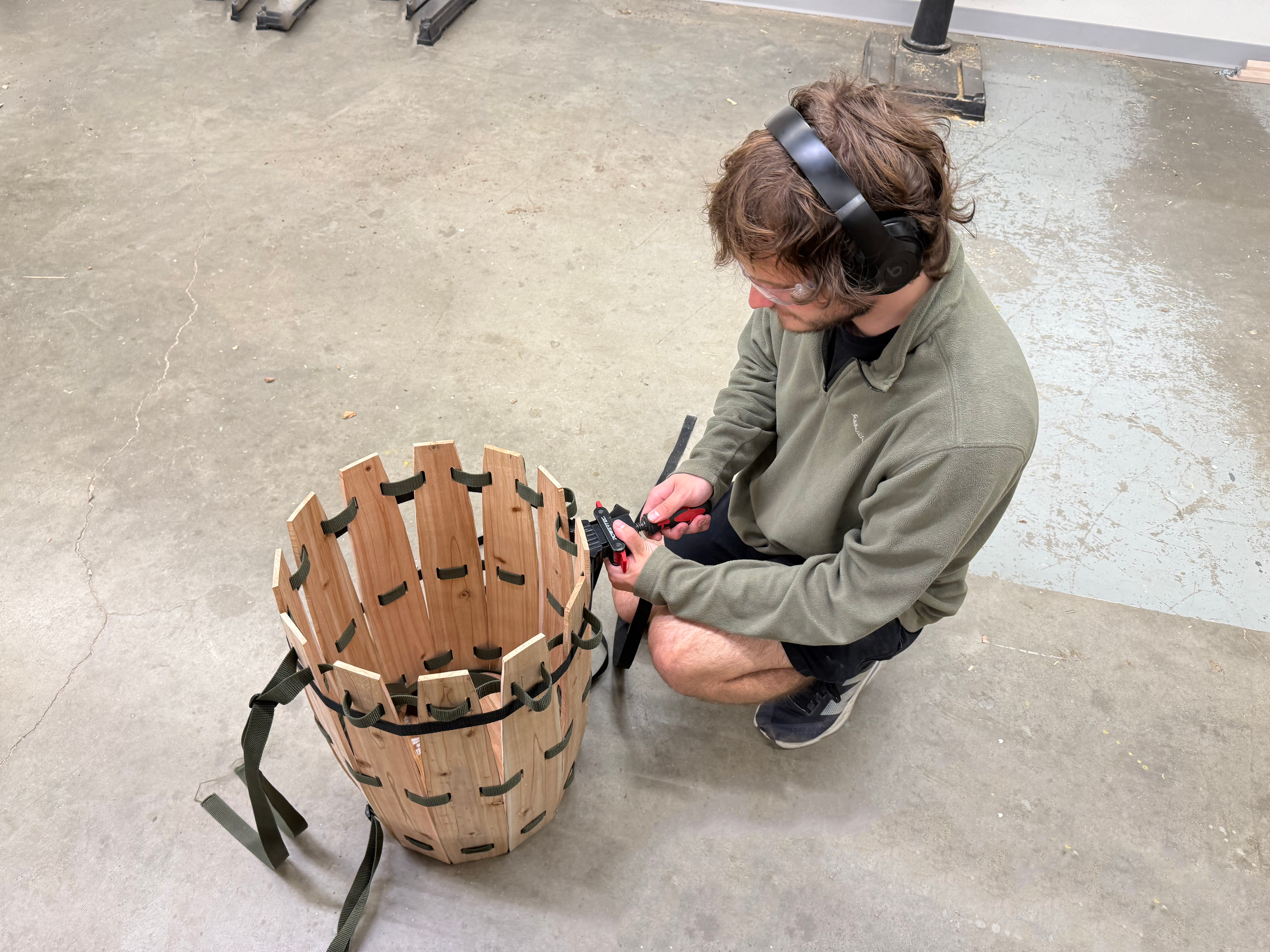
The nylon was threaded through the staves and stapled to the back “cap” to allow the wood to bend. It was then tightened from the bottom up to give it the desired shape.
Final Product
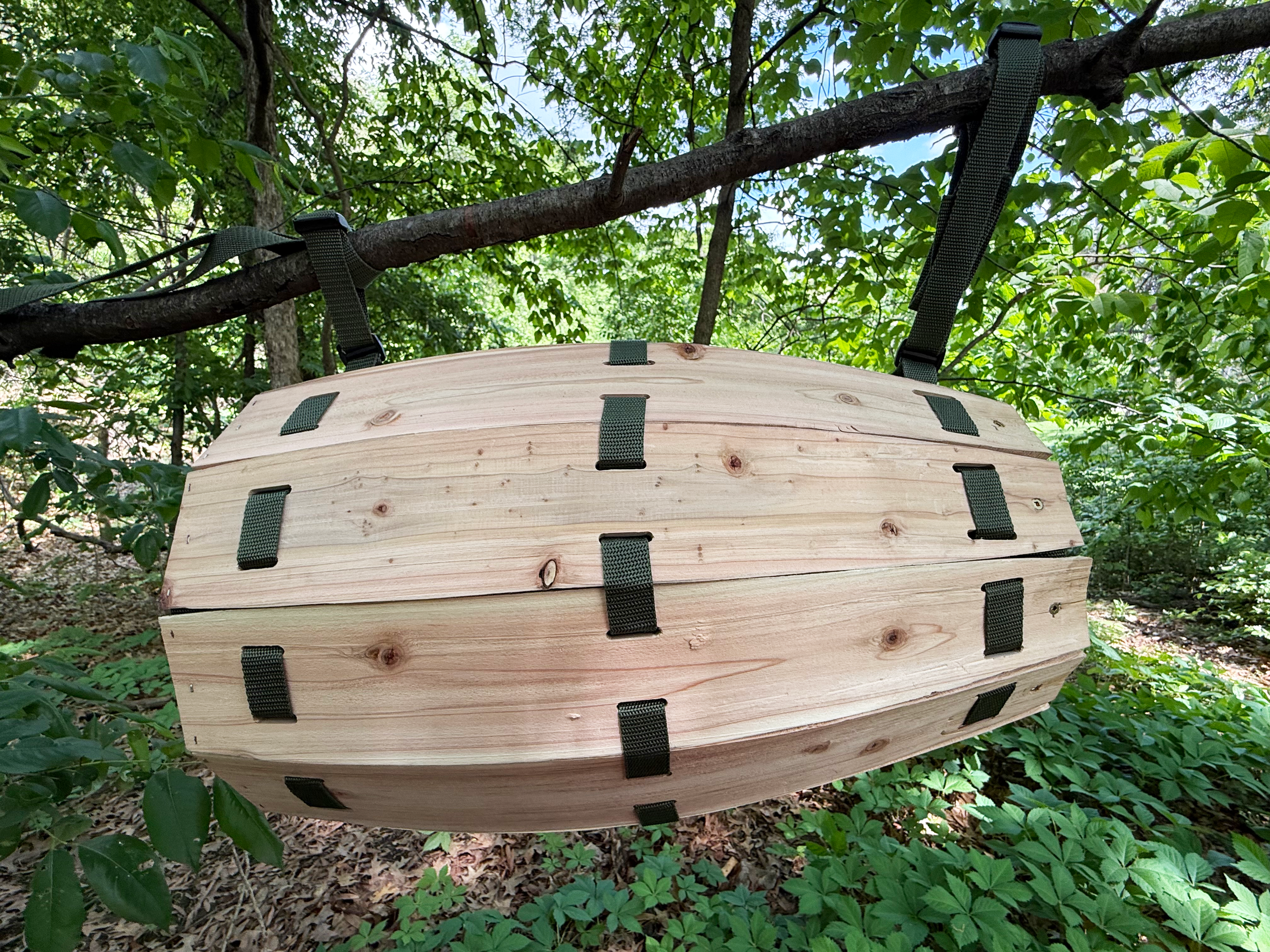
Support straps attach directly to branch
Can fit two “tucked” Toucans and one full length Toucan
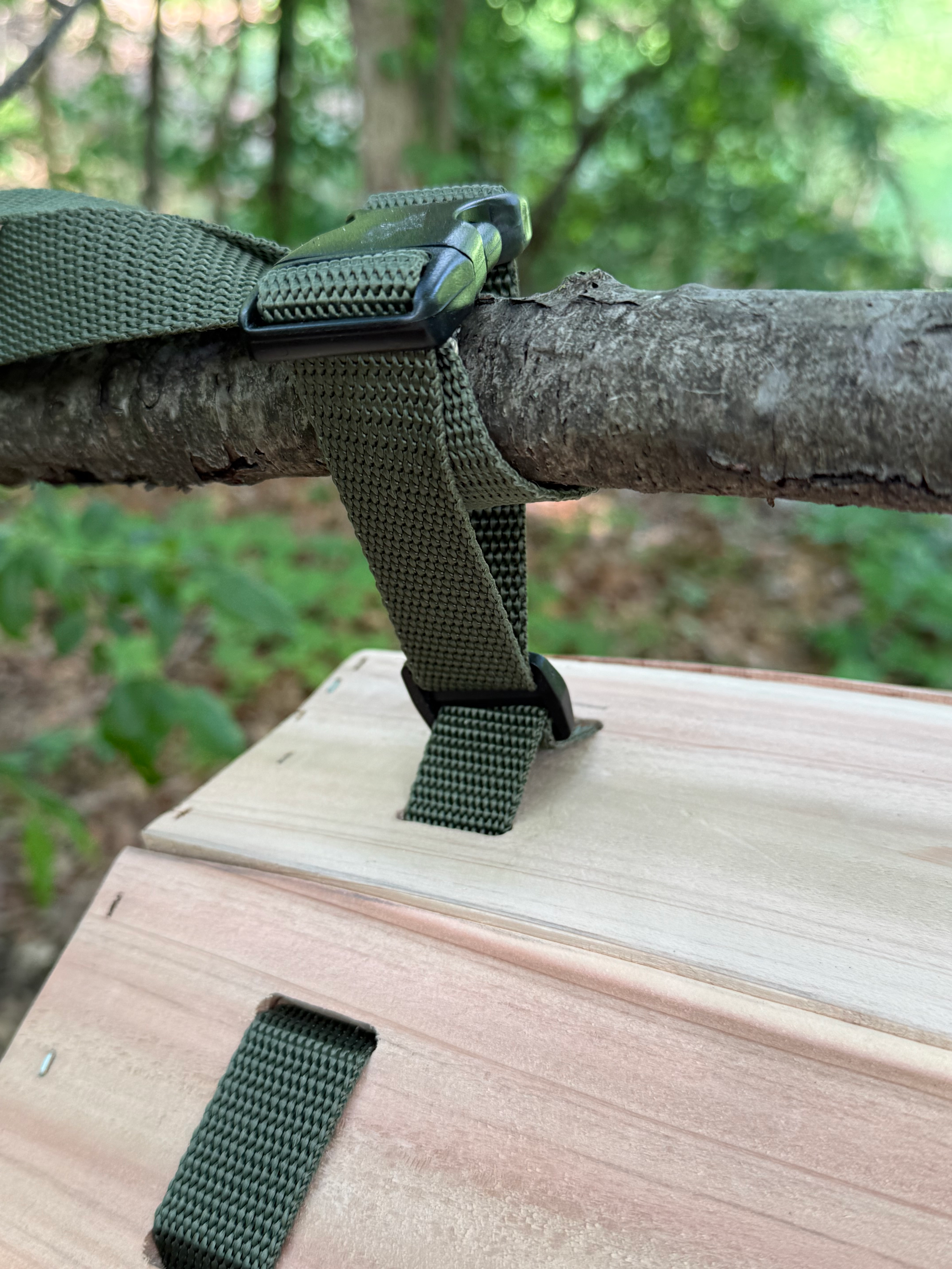
Straps can be adjusted to branch